

Relish that!
-
- from Shaastra :: vol 05 issue 06 :: Jun 2026
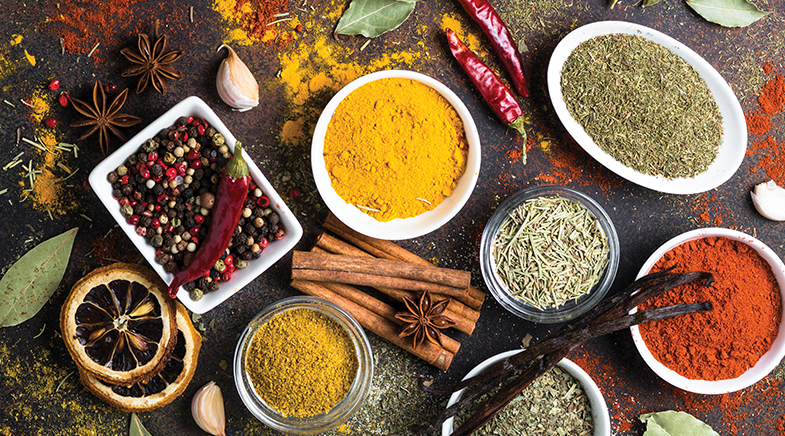
Explorers of the spice trail cook up a storm with research grounded in chemistry and computation.
There are team workers, and then there are lone wolves. Some help the environment with their presence, while the rough edges of others often soften in company. Now, research suggests that group dynamics work not just in office teams but also inside the pickle crock.
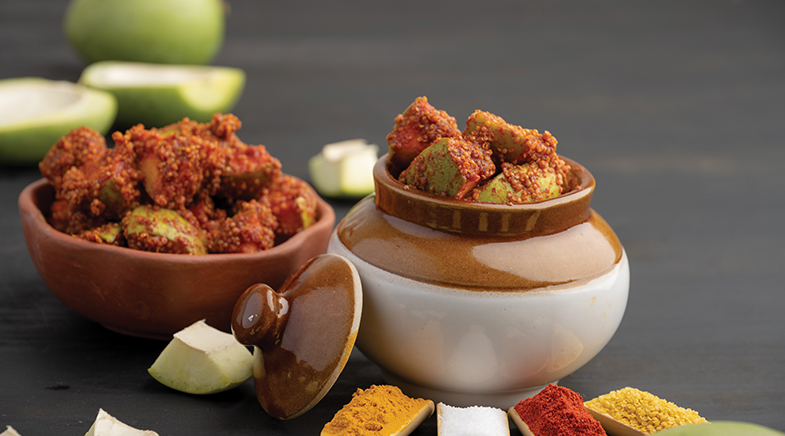
A recent paper by the Institute of Chemical Technology, Mumbai, that delved into the pickle jar, discovered that the spices used behave differently when on their own, compared to when they are, yes, in a pickle (bit.ly/pickle-science). The paper investigated three basic spices used for pickling lemon in mustard oil — turmeric, black pepper and red chillies — and noted how their individual properties were affected in the relish. "In the pickle, the bioactive compounds from the spices were released at different rates than they would when immersed in oil individually," says Rekha Singhal, Professor of Food Technology, under whom the study was undertaken.
PICKLE SCIENCE
The primary bioactive compound in turmeric, curcumin — an anti-inflammatory agent — dissolves well in a salted spice mix. The presence of acidic lemons prevents the compound from breaking down. Black pepper is the lone wolf whose behaviour remains unchanged — whether immersed in plain oil or as part of a spice mix in oil. Lemons in the pickle can, however, speed the release of the antioxidant piperine, the primary bioactive alkaloid in pepper. In the case of the fiery red chilli, on the other hand, its main bioactive agent, capsaicin — a pain reliever, antioxidant and anti-inflammatory molecule — gets tempered in the pickle. "When immersed in plain oil, its fieriness is much more than when it is in the presence of other ingredients; when together with lemons, its fire gets further tamed," Singhal says.
As a side study, the team also analysed the effect of these spices on the oil itself. In 90 days, a plain jar of mustard oil showed signs of rancidity, but the oil in the pickle became loaded with antioxidants and remained fresh. The lemons lowered the pH, too, further preventing spoilage. "We see a similar chemistry in the preparation of oleolites (oils infused with medicinal herbs) that are popular in Europe," she says. Singhal believes that there is a lot to learn about the science packed into chutneys, pickles and papadams.
Her next work explores the interactions between the ingredients in a rasam spice mix. Each community or even sub-community in South India has its own rasam recipe. Many spices used have strong nutraceutical properties. "Could we design a powder that has the best mix of these ingredients, without compromising on the sensory acceptance, and promote it as a nutraceutical soup?" she wonders.
While spices are part of India's culinary tradition and their benefits are known intuitively, researchers have been closely studying these dried seeds, bark, leaves, and roots. Biochemical interactions of spices, their impact on a person's health and well-being, and their distinct signatures on regional cuisines and recipes are areas of ongoing research.
CURRY FLAVOUR
A 2021 study in Singapore's National University Hospital on volunteers of Chinese origin looked at the impact of Indian spices on gut microbiota. It concluded that even a single dose of a spicy curry mix could modulate the populations of microorganisms (bit.ly/spice-dose). Volunteers were given food cooked with seven dried Indian spices, not usually consumed by the Chinese community. These were turmeric, cumin, coriander, Indian gooseberry, cinnamon, clove, and cayenne pepper (red chillies). The researchers noted that even a single dose of the spice mix could positively modulate the gut microbiota, for instance, restoring beneficial Bifidobacteria populations, even though the gut's alpha diversity did not change. Volunteers who were treated to spicier curries, with 12 grams of spices per meal, showed a higher restoration of the Bifidobacteria population than those given 6 grams of spices. It concluded that polyphenols in spices were responsible for these changes, including the antimicrobial action against opportunistic pathogens.
Decoding the DNA of cuisines is key to designing new dishes while preserving culinary integrity. It also helps in designing newer dishes.
"Spices form the fulcrum of Indian cuisine. Shuffling them in a recipe dramatically changes the food pairing index (FPI)," says Ganesh Bagler, head of Computational Gastronomy at Delhi's Indraprastha Institute of Information Technology. The FPI is calculated based on the average number of shared flavour molecules per dish. A high FPI indicates that the ingredients share many chemical compounds.
Bagler explores food science through an emerging discipline called computational gastronomy that uses data science to decode flavour molecules and pairings. He notes that swapping ingredients in an Indian recipe — one vegetable for another, for instance — might or might not preserve the recipe's integrity, but the spice mix is sacrosanct. Changing that may mean upsetting the balance of flavours and taste.
RELATIONSHIP STATUS
Many Indian recipes, Bagler adds, are distinct because of their negative food (or ingredient) pairings. This means that the flavour profiles of the ingredients are completely different: for instance, cumin and asafoetida, or mustard seeds and curry leaves. Positive groupings among spices include cinnamon, cloves and cardamom in masala tea or biryani. While the recipe as a whole might have negative pairings, there could be subgroups of positive pairings within it — such as cream and cashew in butter chicken, and coriander, cumin and lentils in sambar. This layering of flavours brings complexity and balance to the dish.
In Indian cuisines, spices predominate in determining the flavour profile. A paper that delved into analysing sub-regional cuisines of India's North-Eastern States through computational methods shows that most recipes have just four or five ingredients, but "ingredients from the spice category… made a significant impact on the food pairing behaviour in the food…" The strong negative-pairing influence in the dishes was in teaming up spices such as red chillies, garlic, turmeric and bay leaves. The positive pairing was pork, ginger and tomato (bit.ly/NEIndia-flavours). Western cuisines generally use ingredients with similar flavour profiles within a dish, such as dairy and wheat, though there can be variations within recipes.
Decoding the DNA of cuisines, says Bagler, is key to designing new dishes while preserving culinary integrity. "It also helps in designing newer dishes within a cuisine that align with special dietary and nutritional needs," he says. A team of researchers from the University of Barcelona, Spain, and the University of Parma, Italy, analysed several cookbooks of Catalan recipes using computational methods. "The system could generate a novel hybrid recipe that combines the shared base ingredients with complementary elements drawn from different recipes in the clique, such as fish and potatoes. This could lead to the creation of a novel, non-catalogued dish, such as 'Garlic and potato cream with steamed fish bites'," the researchers say in their paper (bit.ly/catalan-cooking).
Bagler's team has created a publicly available flavour database. He hadn't realised how popular it was till there was a glitch with the website. He began getting calls from bartenders who, it turned out, used the database to create cocktails.
Clearly, in India, spices sizzle. And there's more to them than mere flavours.









The science secrets from a boy king's tomb
How science and technology helped reconstruct aspects of King Tutankhamun's life.


Innovate or perish
A provocative thesis on what drives – and stalls – technological innovation and growth.
The pulse of a farm revolution
For years, Rajeev Varshney has been using genome-assisted breeding techniques to create hardy crops.



Have a
story idea?
Tell us.
Do you have a recent research paper or an idea for a science/technology-themed article that you'd like to tell us about?
GET IN TOUCH