

Unit, yet well-knit
-
- from Shaastra :: vol 05 issue 06 :: Jun 2026
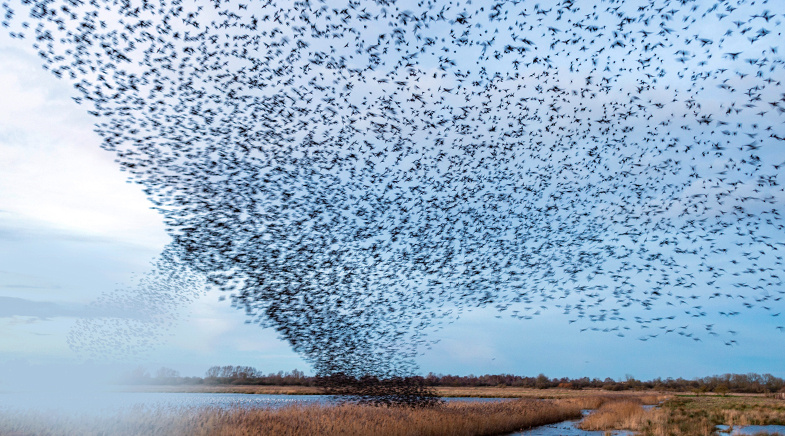
When intelligence comes not from a central command but from interactions within a collective.
Twice every year, in the last week of October and the first week of March, a large group of blackbucks gathers, in an empty field the size of a football ground, in the Velavadar Blackbuck National Park in Gujarat. Every male antelope marks a couple of metres as its territory. Once they have all congregated, the does walk through these clusters of males to choose a mate. This mating behaviour — called lekking — is rare but has been observed in a range of organisms and has been closely examined by researchers studying animal behaviour.
For Vishwesha Guttal, an ecological physicist at the Centre for Ecological Sciences, Indian Institute of Science, Bengaluru, this blackbuck lekking is a window to collective dynamics: an opportunity to study how actions of individuals in the group and interactions with their immediate neighbours shape the behaviour, success, and continuity of the entire group. Along with his colleagues, Guttal is seeking to understand the one-on-one interactions among blackbucks that prompt them to form these large clusters repeatedly.
Across the natural world, there are countless instances of collectives that interact in unique ways to produce coordinated group behaviour.
For more than a decade now, Guttal has studied group dynamics in a variety of animals — from cells and micro-organisms, to insects, fish, birds, and large mammals — trying to identify interactions that enable animal groups to act as a cohesive unit or become disordered, and transition from one state to another."In some sense, the entire field of collective behaviour tries to link what is happening at the local level between organisms — what kind of interactions occur — and how they scale up to produce collective behaviour," Guttal says.
In a March 2026 study (bit.ly/Flocking-Stopping), Guttal and his colleagues describe a new mechanism for collective behaviour that they call flocking by stopping. The paper argues that groups can become coordinated not by moving more, but by stopping at the right moments. They had earlier demonstrated (bit.ly/fish-noise) that all it takes for highly disordered schools of fish to become ordered is a random decision. In highly ordered schools of fish, a stochastic decision has little impact on the group's overall behaviour. But in disordered schools, stochastic decisions have a greater impact."When you're already highly disordered, you can only become slightly better," Guttal says."So, surprisingly, stochastic decisions actually help schools go away from disorder towards order, and once they are there, they actually get locked into the (ordered) state for a sufficiently long time."
Examples of such collective behaviour are not limited to blackbucks or fish schools. Across the natural world, there are countless instances of collectives that interact in unique ways to produce coordinated group behaviour.
LEADERLESS BUT NOT LOST
One remarkable feature of many such animal collectives is that they behave in a way that is greater than the sum of their parts. Individual members respond only to neighbours and signals in their immediate vicinity, yet the group as a whole can achieve outcomes that no single individual could. This happens despite each member of the collective not always working towards the common goal. These systems are often decentralised and leaderless: no bird is directing a flock, no ant controlling traffic, no fish coordinating an entire school. And yet, these collectives manage to navigate, forage, evade predators and adapt to changing environments efficiently.
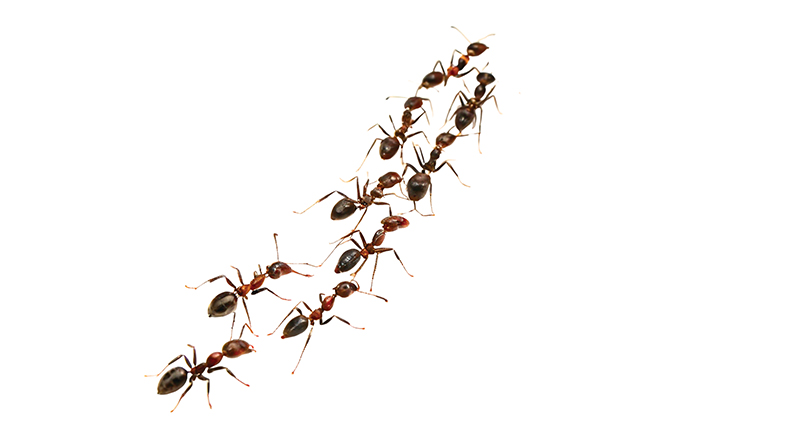
These systems are often decentralised and leaderless: no bird is directing a flock, no ant controlling traffic, no fish coordinating an entire school.
Take the case of ants. Ants release pheromones that tell their neighbours where they are going. If the pheromone is wiped off, ants have no central traffic signalling system or Google Maps telling them where to go and when. Despite lacking a central command system, these collectives achieve greater success as groups than they would have as individuals.
This attribute of collectives has inspired the idea of collective intelligence, which holds that the ability lies in the group rather than in its individual members. The group operates as a decentralised system capable of decision-making and problem-solving, and intelligence emerges not from individual abilities but from interactions among members.
Across the world, such examples of collective intelligence in nature have inspired scientists to design complex systems with decentralised intelligence that act as a collective. A case in point is the action of termite-inspired robots. In a much-cited 2014 paper (bit.ly/Termite-Robots) in Science, researchers showed that a group of simple robots could build complex structures without any leader, blueprint, or centralised control. The user just defines the desired structure, and the robots use local sensing within a shared environment to produce it.
An older, more foundational example of such a nature-inspired complex system is the concept of Ant Colony Optimisation (ACO). Introduced by computer scientist Marco Dorigo in the early 1990s, ACO takes inspiration from pheromone-following ants to create systems that solve complex optimisation problems.
"An ant colony can discover efficient paths to food sources, adapt to environmental changes, allocate labour dynamically, and make robust collective decisions — all without any central control or global view of the situation. From a computational perspective, this was extremely interesting because it suggested that complex problem-solving could emerge from local interactions among simple agents," says Dorigo, who is now the Research Director of Le Fonds de la Recherche Scientifique in Belgium."This ultimately inspired the development of ACO, where artificial ‘ants' cooperate indirectly through shared information to solve difficult combinatorial problems." Some examples of areas where ACO algorithms are routinely used include delivery logistics, airline scheduling, and even internet routing.
In the past decade, research has increasingly shown that such decentralised coordination was not just a biological curiosity; it can also serve as a blueprint for engineering systems capable of solving complex problems without centralised control.
SWARM SOLUTION
For electronics engineer P.B. Sujit, Professor at the Indian Institute of Science Education and Research (IISER) Bhopal, there is no shortage of inspiration from wildlife. Living outside the campus in an open area, he regularly sees wildlife — jackals, birds, and other animals. In his everyday work, he designs robot swarms that are inspired by animal collectives."Nature represents highly optimised systems evolved over extremely long timescales. As roboticists, we are constantly trying to learn from that optimisation," says Sujit.
Each robot senses its local environment and makes decisions independently based on the information available nearby. That is where decentralisation comes in.
He mentions sardine-hunting dolphins that often form dense circular formations around fish schools before attacking collectively."We can use similar ideas in robotics by using attractive and repulsive interaction fields to split or merge robotic teams dynamically," he says. Sujit is also inspired by the work of Iain Couzin, Director of the Max Planck Institute of Animal Behaviour, Konstanz, Germany. Couzin has developed nature-inspired collective-behaviour models that rely on simple interactions: alignment, attraction, and repulsion. For example, if many nearby agents are aligned in a certain direction, an individual tends to align with the average orientation of its neighbours. Simple local interaction rules can generate complex collective behaviours, such as formation maintenance, gathering at a location, or splitting into multiple coordinated groups.
In a recent work (bit.ly/Decentralise), Sujit's group has designed a swarm robotic system based on the control barrier function, a mathematical way to keep the system in a safe zone, where robots can operate without obstacles. It acts like an invisible elastic boundary that keeps autonomous systems safe while allowing them to move freely. If a robot tries to move outside that safe region, the barrier pushes it back into the allowable region. He compares it to strong winds pushing someone back when they drift too far. These barriers, Sujit explains, helped maintain connectivity among robots while also preventing collisions, both among team members and with external obstacles. The important part, according to him, is decentralisation: no centralised controller is telling every robot exactly what to do. Instead, each robot senses its local environment and makes decisions independently based on the information available nearby. That, he says, is where decentralisation comes in.
"A centralised system has a single point of failure. If the central controller fails, the entire system can collapse. In decentralised systems, individual agents continue to function independently. Even if many agents fail, the mission itself may continue — perhaps less efficiently, but it can still succeed," he adds.
Couzin noted in a 2026 article (bit.ly/animal-robot) in Nature Communications that a defining feature of evolved collectives was"their capacity to be robust to small fluctuations or noise, yet simultaneously capable of sensitivity to small, salient changes". These were characteristics that might appear contradictory, he wrote."Robustness emerges from redundancy in individual roles, distributed information processing, feedback control, and error-tolerant interaction mechanisms, while responsiveness arises through nonlinear feedback processes that selectively amplify relevant information."
SMARTER TRAFFIC
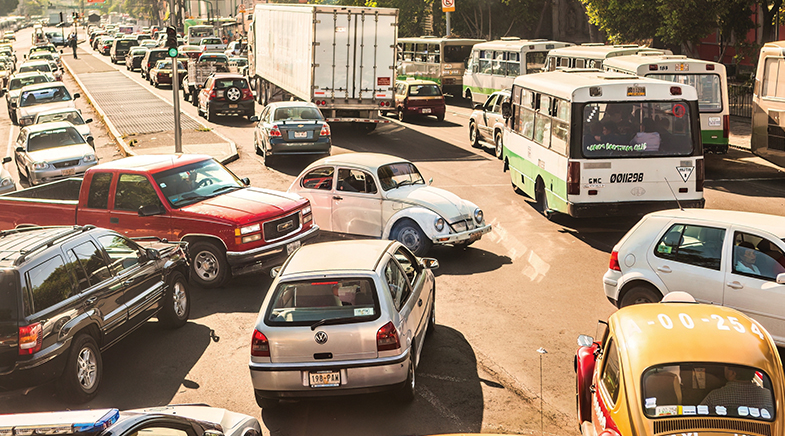
A crowd collectively making space for someone who is in an emergency may sound utopian. However, such coordinated behaviour is not uncommon in nature. Computer scientist Danny Raj at the Indian Institute of Technology Madras drew inspiration from how an intruder moves through granular materials such as sand or grains, where nearby particles shift collectively to make space."Our inspiration came from microscale swimmers moving through fluids, which displaced surrounding fluid in characteristic patterns," says Raj."Similar displacement patterns also appeared in granular flow, such as when a finger moved through rice grains." Raj's group now wants to apply the same mechanism in the Indian traffic system.
Imagine a situation where an ambulance is struggling to penetrate dense, lane-less traffic, as often seen on Indian roads. This is an issue that poses a risk to someone's life. Using nature-inspired flow patterns, Raj and his team are designing a simple"traffic rule" that tells nearby agents how to make tiny, coordinated movements so that a path opens up naturally for the moving agent. His group used these patterns as inspiration for designing traffic rules and demonstrated that such strategies worked in simplified conditions.
Using mathematical modelling and computer simulations (bit.ly/Traffic-nature), the team analysed how nearby agents respond to the movement of an intruder and reorganise themselves collectively to open a path. Instead of relying on centralised control, the model used simple local interaction rules between neighbouring agents. Raj explains that the broader goal was to create a"digital twin" of human behaviour under specific conditions, which could then serve as input for autonomous vehicles. Such vehicles could use real-time information to predict future movement over short time intervals and make decisions accordingly.
Future traffic management systems may operate like intelligent swarms, in which autonomous vehicles, sensors, and humans continuously interact and adapt to one another without relying entirely on centralised control. In such systems, traffic flow could emerge from countless local interactions, much as flocking birds or schooling fish coordinate movement collectively, suggests a study (bit.ly/Coordinating-Movements). This form of collective intelligence could help cities reduce congestion, improve safety, respond dynamically to unexpected situations, and make transportation networks more resilient and energy-efficient.
THE REALITY GAP
Dorigo believes that, despite progress in learning from natural collectives, the"transition from biological inspiration to engineering reality" is much more difficult than it initially appeared."Ants evolved over millions of years; their bodies and behaviours are tightly integrated, and they function in highly specialised ecological contexts. Engineers, by contrast, are expected to produce reliable systems within limited development times and under strong economic and practical constraints. Evolution can"experiment" across enormous timescales and tolerate countless failures; engineering usually cannot, he adds.
According to him, one major challenge is scalability. Testing artificial swarms in the physical world is"expensive, slow, and technically difficult", and researchers rely heavily on simulations."This results in the so-called ‘reality gap' between simulation and physical systems. A collective behaviour that works beautifully in simulation may fail in the real world because of small imperfections in sensing, timing, communication, friction, or environmental variability. In swarm systems, small discrepancies can cascade through the swarm and eventually produce large, unexpected effects," he explains.
Scalability is a challenge. Testing artificial swarms in the physical world is"expensive, slow, and technically difficult". Researchers rely on simulations.
Sujit points out that inter-agent communication is one of the biggest unresolved challenges. Another major issue, he notes, is human-in-the-loop control. Even if autonomous swarms become highly intelligent, humans must remain responsible for critical decisions. But once humans are placed in the loop, another challenge emerges: information overload. Sujit imagines a situation in which hundreds of drones simultaneously receive data streams from all the drones."Designing effective human-swarm interaction systems and interfaces is therefore extremely important," he says.
One approach his group explored involved controlling only a few leader agents rather than every agent individually, while the rest of the swarm followed through local interaction rules. But, even there, communication delays and interface design remain critical research questions.
FUTURE DIRECTIONS
Notwithstanding the challenges, the footprint of decentralised collective intelligence continues to expand. From robotics to financial markets to epidemiology, from managing crowds on roads to crowds on the internet, no area is untouched by it. Even in artificial intelligence (AI), particularly in multi-agent AI systems, there is a shift towards distributed optimisation and decentralised decision-making."In many real-world systems, from robot teams to sensor networks to autonomous mobility systems, decentralised approaches may offer advantages in robustness, scalability, and flexibility," says Dorigo."Although swarm intelligence and cognitive architectures (used in AI) developed along different lines, they share this broader shift toward viewing intelligence as an emergent property of distributed interactions," he adds. For example, in 2025, U.S.-based AI company Anthropic released a multi-agent system, specifically designed for research work (bit.ly/Multi-Agent-System). This system, with"Claude Opus 4 as the lead agent and Claude Sonnet 4 subagents, outperformed single-agent Claude Opus 4 by 90.2% on our internal research eval," says a report on the Anthropic website. A 2022 study (bit.ly/Traffic-Pheromone) describes a traffic management system that does not rely on centralised traffic control. Instead, vehicles collectively share local traffic information and avoid congested roads using a virtual"pheromone" system. Simulations showed that the method reduced traffic congestion, travel time, and fuel consumption.
In healthcare, too, studies have harnessed the collective intelligence of natural swarms for targeted interventions. A 2022 study (bit.ly/Microrobotic-Swarms) focuses on microrobotic swarms and embolisation, which is a clinical technique used to block blood vessels to treat tumours, fistulas, and arteriovenous malformations."We established an analytical model that describes the relationships between fluid viscosity, flow rate, branching angle, magnetic field strength, and swarm integrity, based on which an actuation strategy was developed to maintain the swarm integrity inside a targeted region under fluidic flow conditions," the researchers note in the paper.
Decentralised intelligence opens up several interdisciplinary opportunities ahead in biology, computer science, robotics, physics, and, increasingly, in social systems and economics."Understanding collective behaviour may become essential for addressing large-scale distributed problems in technology and society," says Dorigo."Finally, there is a philosophical dimension that continues to fascinate me: collective systems challenge our traditional notions of intelligence, control, and individuality. They force us to rethink where ‘intelligence' actually resides in a system."
Also read:










Looking ahead
Turning the light on graphene, cancer and clean water.



Have a
story idea?
Tell us.
Do you have a recent research paper or an idea for a science/technology-themed article that you'd like to tell us about?
GET IN TOUCH