

Heat and crush
-
- from Shaastra :: issue 10 :: Oct 2026
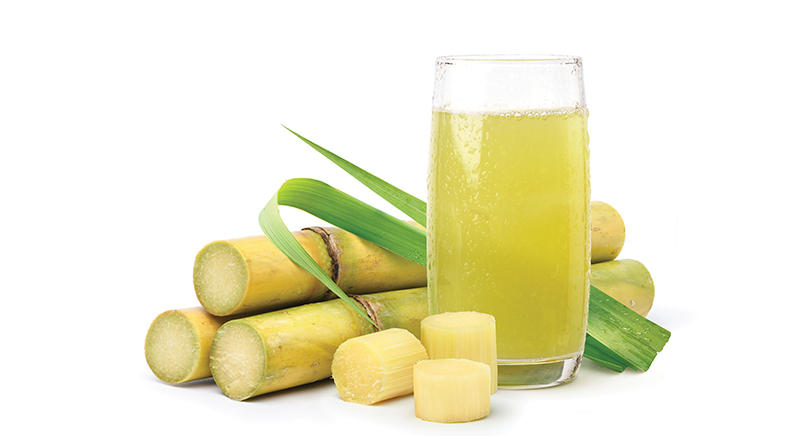
Start-ups work on cancer therapy, heated shelters, and sugarcane juice.
MagHeals
Founders: Shilpee Jain and Rajesh Katoch
Year: 2021
Big idea: To combine magnetic nanoparticles with heat for cancer therapy

NCF Green Energy
Founders: C. Subramaniam and Shubham Tiwari
Year: 2024
Big idea: To develop heating solutions using nano carbon florets

The curious effect of a flashlight on a powder led C. Subramaniam, a Professor in the Department of Chemistry at the Indian Institute of Technology (IIT) Bombay, to look more closely at the material he and his team were examining in the laboratory.
The researchers were developing different materials — including Nano Carbon Florets (NCF) — in the lab. When a student tried to photograph NCF powder using his camera flashlight, the team noticed sparks coming from the powder. "We said, 'this looks interesting'," says Subramaniam. "If something starts to spark when a flashlight is used on it, that means there is a tremendous amount of heat being generated in the material."
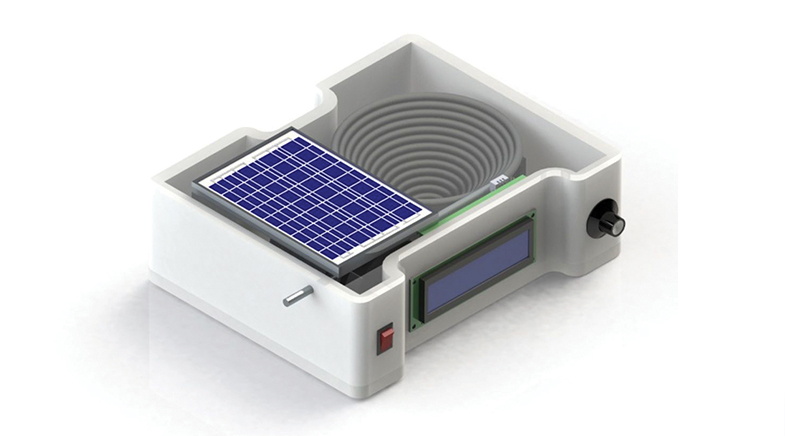
Subramaniam, who completed his integrated PhD in Chemistry at IIT Madras before pursuing a postdoctoral fellowship in Japan, says they decided to use the material to convert sunlight into heat. And, along with Shubham Tiwari, who did his Master's in Chemistry at IIT Bombay, Subramaniam started NCF Green Energy.
Convinced the solution would benefit Army personnel in high-altitude areas, they conducted NCF experiments on the IIT Bombay campus using a tent that resembled an army shelter. An Indian Army officer, at the institute for a course, noticed it. "He got curious, and we explained to him what we were trying to do," Subramaniam says. The military man connected them with others in the force, and the researchers were able to put their idea into practice — converting sunlight to heat to warm soldiers' living areas in Kashmir.
Subramaniam explains that when a surface is coated with NCF and exposed to sunlight, the coating generates heat. The team needed a device to store heat, so it developed a thermal battery. "We can store enough energy to run almost 72 hours without sunshine. It takes about 6–8 hours of sunshine to charge it fully. This heat can be stored for a week," he says. Its USP is that it doesn't need much space, conversion is more efficient, and there is no wastage.
The company makes the NCF through a proprietary process at a facility about 100km from IIT Bombay, and also produces the thermal battery. The start-up has installed NCF-coated solar thermal panels for the Army, and will now also explore other industrial applications that require heat, Subramaniam says.
CaneBOT
Founders: Kirty and Milind Datar
Year: 2018
Big idea: To make an automated sugarcane juice vending machine
PHOTO: BY SPECIAL ARRANGEMENT

CaneBOT Founders Kirty (right) and Milind Datar; (below) the start-up’s juice-dispensing machine.
Think sugarcane juice, and the image that comes to mind is a roadside vendor pushing cane into a large machine, with hillocks of crushed cane sticks stacked alongside. Now imagine an automated vending machine — the kind that dispenses coffee or tea — pouring out fresh sugarcane juice. That is what husband-and-wife duo Milind Datar and Kirty offer through their venture CaneBOT.
They started with a semi-automatic tabletop machine to crush the cane, much smaller than the roadside machines. They installed it in cafeterias in office buildings and sold about 11 lakh glasses in 18 months. But COVID-19 led to lockdowns and office closures. By then, the Datars had felt the need to develop an automated vending machine to scale their operations.
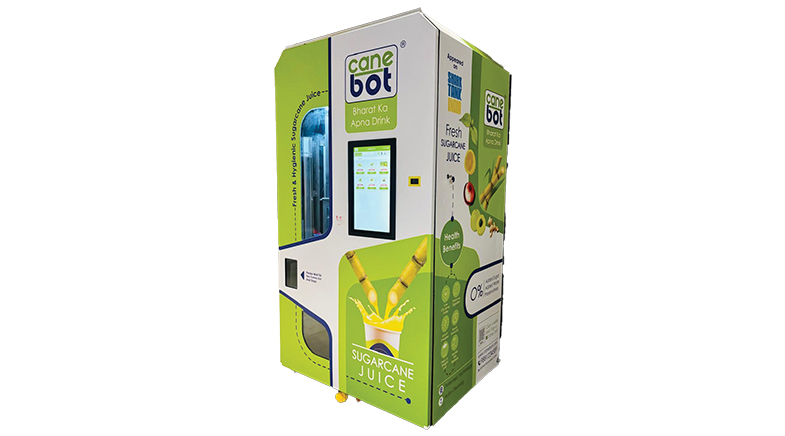
"After a lot of iterations, we came up with a fully automatic machine for sugarcane juice," says Milind, who holds a Master's in Social Work from The Maharaja Sayajirao University of Baroda. But it wasn't as simple as they thought, adds Kirty, who has a Master's in Computer Management from the erstwhile University of Pune.
The first problem they faced was that no two sugarcane sticks were identical in hardness, thickness, length, or the distance between two nodes. But automation requires uniform inputs, Kirty points out. They also had to deal with other issues: the juice had to be fresh, and the crushed cane had to be disposed of promptly, as it would otherwise smell and attract flies. They had to ensure each cup of juice was crushed after use, with no leftover juice in the machine. They addressed these issues when they developed the machine, she says, designing the crusher to accommodate cane sticks ranging from 25mm–42mm in thickness.
The machine they developed has sensors and uses artificial intelligence in its operations. The cane is cut to a uniform length of 18 inches. The customer can select an additional flavour for the juice — lemon, ginger, etc. A stick of cane is pushed into the crushing area; the exact amount of cane required for a cup of juice is crushed, and the flavours are added. The juice is then dispensed. The crushed cane is sent to a filter, which inverts and cleans itself at set intervals. After nearly four years of working on the machine, they installed the first machine at an information technology company's campus in Pune in mid-2025. They now have five vending machines installed in Pune. A 250-ml cup of juice costs `75. The company has just started generating revenue.
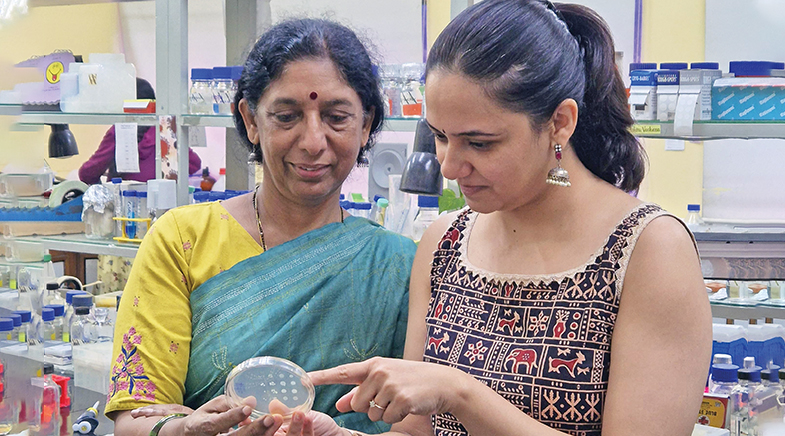








A trick in the wall
The discovery of an enzyme used in bacterial cell wall synthesis may lead to new drugs.

New ideas: sell, cell, gel
Start-ups focus on production, insect detection and solar panels.
DNA shows a new way
A bacterial enzyme makes DNA in a hitherto unknown method.



Have a
story idea?
Tell us.
Do you have a recent research paper or an idea for a science/technology-themed article that you'd like to tell us about?
GET IN TOUCH

