

From soil to air
-
- from Shaastra :: vol 05 issue 11 :: Nov 2026

Tackling asthma, microplastics, and seed quality.
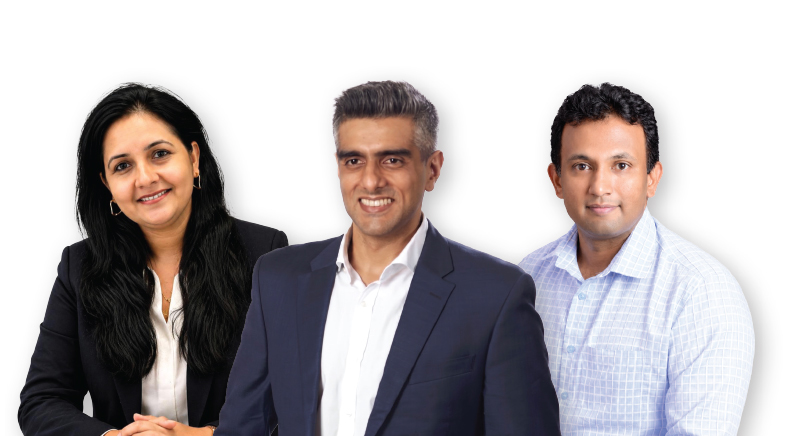
AeroDel Technology Innovations
Founders: Zahir Jaffer, Shradha Sangwai, and K.K. Suraj Rajan
Year: 2020
Big idea: To design and develop inhalation devices for respiratory problems
When Zahir Jaffer, an asthma patient in his childhood, co-founded a start-up with Shradha Sangwai, whose son also suffered from the respiratory disorder, and K.K. Suraj Rajan, they focused on effective, patient-centric inhalation devices. Since most products on the market were either imported or designed abroad, they decided to design and produce the devices themselves. They raised funds, and in 2023 — three years after AeroDel Technology Innovations was incorporated — they were ready with its first product.
The team understood the limitations of existing inhalation devices. In most cases, the patient has to actuate the device and inhale at the same time. Often, due to lack of proper synchronisation, nearly half the drug is deposited in the mouth or throat, instead of going straight to the lungs. So, the team designed a device that eased inhalation and ensured more of the drug reached the lungs.
The device is a spacer to be fixed to an inhaler. It doesn't need to be attached and detached before and after every use, as it folds back into the inhaler. Jaffer says the design improves drug deposition. "The portable, foldable form makes the inhaler-spacer combination easy to carry, supporting consistent use by patients wherever they are," he says. Sangwai adds that the spacer is being sold through pharmaceutical companies.
According to Jaffer, the company has also developed an Oscillating Positive Expiratory Pressure (OPEP) device to exercise the lungs and help remove mucus from the airway. He says OPEP devices already in the market are expensive and are mostly imported. He adds that AeroDel's OPEP device costs around `1,400, compared with `6,000–7,000 for imported ones. The company is now working on two other products: a mist nebuliser, and a device to measure lung capacity and airflow.
BacAlt Biosciences
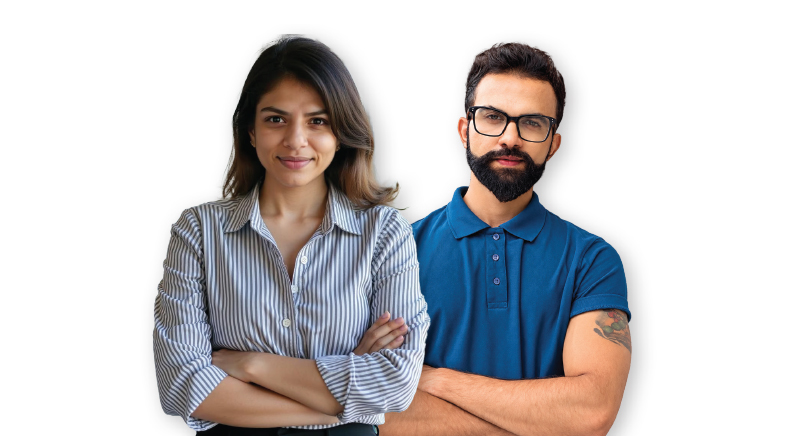
Founders: Shruti Kutmutia and Pranav Nair
Year: 2023
Big idea: To convert crop and fruit waste into biopolymers using fermentation
Shruti Kutmutia had a mission: to understand why microbes behaved the way they did. After a Bachelor's degree in Microbiology from Fergusson College, Pune, she spent six months in Egypt, studying the state of children's gut microbiome during Ramzan. She followed this up with a job, a Master's in Bioinformatics and Biotechnology from the Institute of Bioinformatics and Applied Biotechnology, Bengaluru, and then a role as a research associate at Nanyang Technological University in Singapore, where she studied air microbiomes.
In the lab, an analysis of personal care products revealed microplastics not just in the packaging, but in the products themselves. This got her thinking: could biopolymers eliminate microplastics? She decided not to pursue her PhD, but to become an entrepreneur. She contacted Pranav Nair, who had done his Bachelor's in Microbiology at Fergusson when she was studying there. With Nair, who had a PhD in Microbiology, she founded BacAlt Biosciences, based in Bengaluru.
Kutmutia says the company obtains microbes from agricultural and crop residue in and around Bengaluru. They then put these in fermenters to make biopolymers and speciality ingredients for mass-market applications. Currently, most speciality formulations rely on synthetic polymers, which result in microplastics. She adds that BacAlt Biosciences turns post-harvest losses into cutting-edge biopolymers (bacterial cellulose and poly-gamma-glutamic acid) for cosmetics, textiles, wound care, and agricultural applications.
The company is conducting pilot tests for its products in an 8,500-square-foot facility. The challenge, she says, is ensuring consistency in every batch of products to meet customer requirements. She adds that it will need a fully automated production system to eliminate contamination. Once that is achieved, the modular set-up can be scaled up. Another challenge is to remain cost-competitive. A few global companies, mostly in Europe, produce biopolymers, but BacAlt plasticises cellulose differently from European companies. She says the biopolymers cannot be replicated chemically. Biopolymers have been expensive so far and therefore inaccessible to the mass market. "Our products will be affordable and accessible and maintain cost-neutrality with what companies use now," she says.
Mandrake Bio
Founders: Tanay Lohia and Kutubuddin Molla
Year: 2025
Big idea: To build gene-editing tools for seed and pharmaceutical companies
PHOTO:BY SPECIAL ARRANGEMENT

Mandrake Bio Co-founders Tanay Lohia (left) and Kutubuddin Molla.
Tanay Lohia's interactions with unhappy farmers triggered an interest in understanding the reason for low agricultural productivity. While working in a few start-ups, the mechanical engineer from the National Institute of Technology Silchar saw that the problem boiled down to crop health and quality. When he probed the issue further, he learnt that gene editing could improve crop health. He found that gene editing did not genetically modify a crop or require complex regulatory approvals. But, he says, in its current form, gene editing is time-consuming. "I realised that with artificial intelligence (AI) you can have better editing systems," Lohia says. AI would also help reduce the time needed to edit crop genes. That is when he thought of a venture that would combine AI and gene editing. He co-founded Mandrake Bio with genetic engineer Kutubuddin Molla, a Senior Scientist at the Indian Council of Agricultural Research.
The venture takes its name from a plant that saves lives in the Harry Potter series. In the books, mandrake is also shown to have an unseemly appearance. Lohia says gene editing, likewise, can sound intimidating, yet has enormous potential to treat diseases. "We combine artificial intelligence with biology and laboratory experiments. Our AI learns from biological data and helps us design new proteins, the tiny molecular machines that carry out tasks inside living cells. We design these proteins to make specific changes in DNA, then make and test them in the lab. What we learn from those experiments helps us improve the next round of designs," he says.
The company will build the edits and sell the editing tool to seed companies, which can then use them to edit their varieties. Therapeutics companies can also use them to make drugs more effective, he adds.
According to him, Mandrake Bio, which hopes to commercialise its first editor in a few months, will cut the time taken to edit genes from the current eight years to around two years, and significantly lower costs. With Mandrake Bio's technology, Lohia says companies will be able to edit a variety of seeds and use them directly. "We are currently testing our first set of enzymes in the laboratory," Lohia says. The company's customers will be seed, pharmaceutical, and biotech companies, he adds.



What lies beneath
The roots of plants are subterranean architects: how they form and extract nutrients and water from the ground is a fascinating story of evolution.

Psychedelic pacifiers
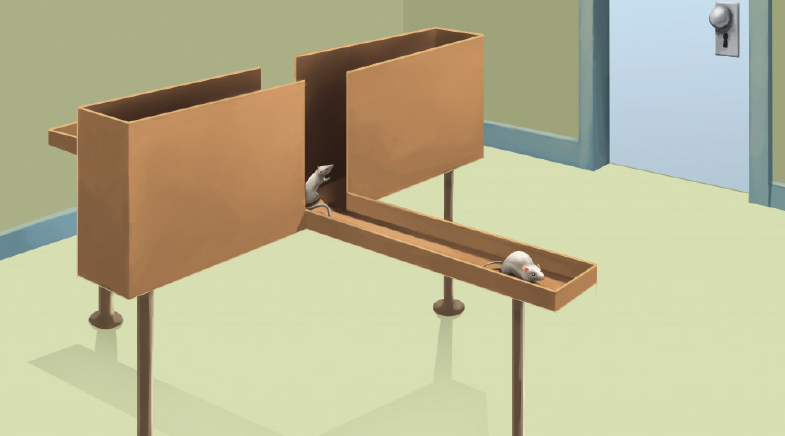
Researchers identify a tiny brain region responsible for reducing anxiety in mice.
The new sound of music
Craftspeople and engineers are co-creating new avenues and materials for sound production. It’s music to our ears.



Have a
story idea?
Tell us.
Do you have a recent research paper or an idea for a science/technology-themed article that you'd like to tell us about?
GET IN TOUCH