

Treating it right
-
- from Shaastra :: vol 05 issue 06 :: Jun 2026
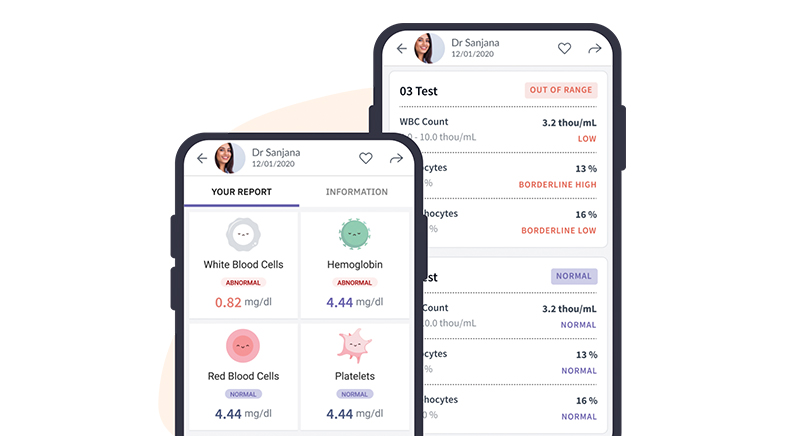
Focusing on water, housework and medical records.
NGEN WATER SOLUTIONS
Founder: Shihabudheen M. Maliyekkal
Year: 2021
Big IDEA: To make water treatment plants using capacitive deionisation
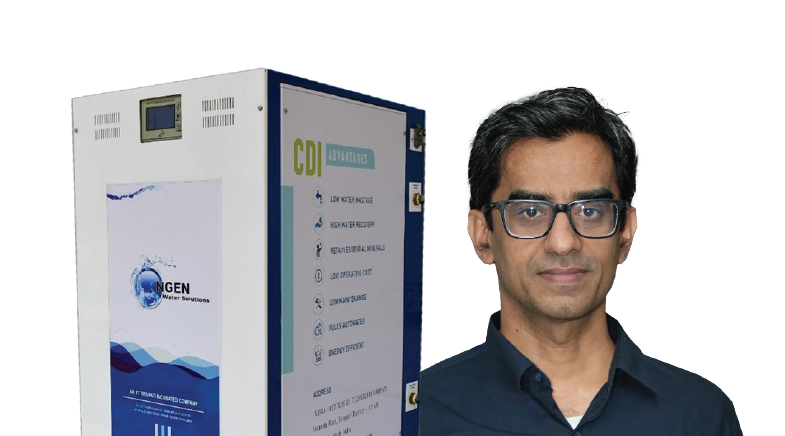
Shihabudheen M. Maliyekkal was part of a start-up that developed a system to provide arsenic-free drinking water when he was completing his PhD at the Indian Institute of Technology (IIT) Madras. He continued to work on water treatment technologies after joining the faculty in the Department of Civil and Environmental Engineering at IIT Tirupati, where he founded NGEN Water Solutions. The start-up, incubated at the institute, has developed Praan-Jal, a non-membrane desalination system that uses capacitive deionisation (CDI) to treat water.
Maliyekkal says that CDI is a more efficient substitute for conventional reverse osmosis (RO)-based water purification systems. It is an emerging, promising technology for treating water at much lower operating costs and with significantly less water waste. It removes charged particles from water using two oppositely charged carbon electrodes with high porosity, high electrical conductivity, and large surface area. The two electrodes are separated by a water-permeable spacer that allows raw water to pass through.
Unlike conventional RO systems that use high-pressure membranes and extensive chemicals, CDI applies electrostatic forces within a simple electrical system. A low direct current voltage is applied across the electrodes, which become electrically charged, creating an electric double layer at their surfaces. These attract and capture oppositely charged ions from the water, yielding purified and low-salinity water, he says.
Maliyekkal, who studied civil engineering at NSS College of Engineering, Palakkad, before pursuing higher studies at IIT Madras, explains that conventional RO systems are energy-intensive. In contrast, CDI selects ions from water via electrode adsorption. In conventional RO systems, water rejection is typically greater than 40% and can be much higher in older systems. In comparison, the rejection rate is 20-25% in CDI systems. The TDS (total dissolved solids) can also be tuned according to requirement, he says. NGEN Water Solutions retains natural minerals, unlike RO-treated water, which has to be remineralised. "We started CDI as an alternative to RO. CDI does have its limitations, because the performance of the system is largely dependent on the material you are using as an electrode." The material's capacity to adsorb electrodes plays a significant role, he says, adding that the company is working to develop the right material.
According to him, the company can make systems that treat up to 10,000 litres of water per hour. Praan-Jal can be used to desalinate drinking water, purify secondary-treated domestic sewage, prepare laboratory-grade water, and improve water for cooling tower applications. The start-up has installed treatment systems at companies such as Amara Raja Batteries and Bosch, a university in Abu Dhabi, and hotels in Kolkata, Mumbai and Hyderabad. The system is assembled using components sourced from different vendors. A bulk of the research and development takes place at IIT Tirupati. Students and scientists are involved in running NGEN Water Solutions, he adds.
EKA CARE
Founders: Vikalp Sahni and Deepak Tuli
Year: 2021
Big idea: A digitally connected, AI-enabled healthcare archival platform
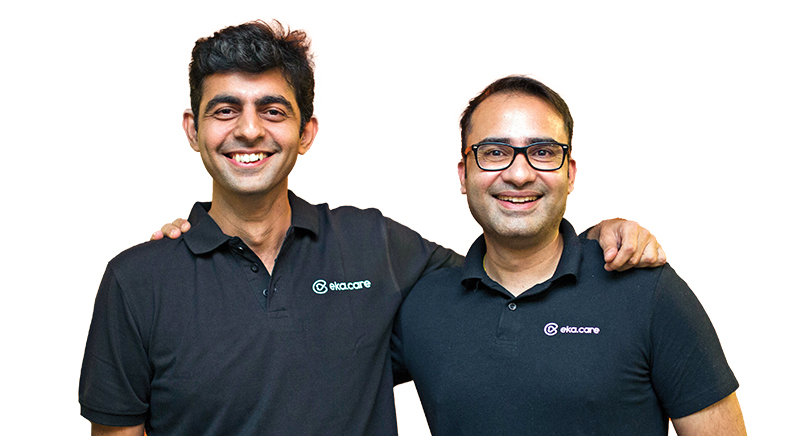
Vikalp Sahni had an epiphany while working on a hackathon project that ultimately led to the development of a contact-tracing app during the COVID-19 pandemic. He realised that India's digital health progress was still in its infancy and that a digitally connected platform could help doctors, hospitals and patients. The thought led to Eka Care, a comprehensive digital archival repository of people's medical histories.
Sahni, who graduated from the National Institute of Technology Silchar, had earlier co-founded the travel aggregator Goibibo. He teamed up with Deepak Tuli, who had worked with him at the travel portal, to start Eka Care in 2021. Sahni points out that many people store their financial data in mobile apps, but their medical history is often painstakingly recorded by a doctor during a consultation. At times, medical history may be incomplete or not recorded in a simple, uniform format. This, he says, led to the idea of digitising medical records. "We should make sure that the conversation between the doctor and the patient is converted into a valuable digital prescription that can be seen by the doctor and the patient and can be easily shared," Sahni says.
The company has two services — EkaDoc and EkaScribe. EkaDoc enables doctors to manage their paperwork — maintaining patient records, digital prescriptions and billing. The company's AI models process data, including voice notes, prescriptions, and laboratory reports, and compile them into structured formats. The data can be analysed to provide insights into individual patients and even population health trends. Besides, they provide clinical decision-support cues that enable timely interventions, he says. EkaScribe uses an ambient listening AI tool and converts a doctor-patient conversation into a prescription and medical notes. The app, available in nearly a dozen languages, is compliant with the Government of India's Ayushman Bharat Digital Mission. Patients can store their personal health records as well as their family's medical history.
Sahni points out that the focus is on doctors and hospitals, and that the company's software has been built to drive value and improve health outcomes. It has been in the market for two-and-a-half years now, and its users include 60,000 doctors and over 200 hospitals and clinics. Large hospital chains, insurance companies and diagnostic laboratories are among its customers. The products can be used either by paying a subscription fee or on a pay-per-use basis.
BOTLOKA
Founder: Pooja Ravishankar
Year: 2021
Big idea: A consumer robotics company building robots for household use
For Pooja Ravishankar, Botloka was a dream come true. After a degree in Telecommunications Engineering from Ramaiah Institute of Technology and an MBA from ICFAI Business School, both in Bengaluru, she worked for a few years before deciding to start a venture. While brainstorming with her family, she came up with the idea of building robots from scratch for household use. Her start-up, which has built a robot vacuum cleaner, is incubated at the Foundation for Science Innovation and Development at the Indian Institute of Science. "It is an existing product, but there is a lot of indigenisation that can happen, and we can build some foundational technologies," Ravishankar says. Robot makers in India source the bulk of their components and technology from abroad, she says. This is not the path she wants to take. She wants Botloka — loka is Sanskrit for the world — to conduct research and development in India, enable robotics manufacturing in the country, and develop household products.
PHOTO: BY SPECIAL ARRANGEMENT
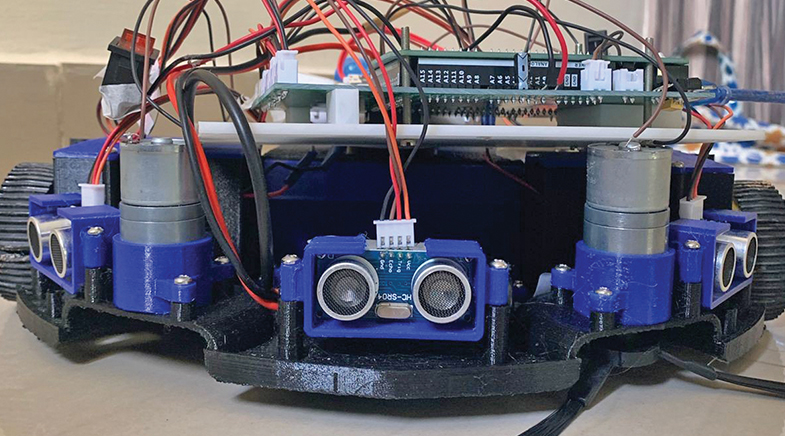
Botloka looks to enable robotics manufacturing in India.
Botloka, she says, will soon have a soft launch of the basic version of its first product — a floor-cleaning robot. "Our attempt is to indigenise the supply chain as much as possible. We got the tooling done in Bengaluru," she says. The market for these robots in India is worth nearly ₹1,000 crore and growing, she adds. Floor-cleaning robots are surpassing vacuum cleaners in sales in India, she says. The challenge is finding vendors for all components, especially motors and compressors. Some parts are being imported, but Ravishankar is confident that they will all be available indigenously within a few years.
Botloka's floor-cleaning robot, she says, will have more suction power than those currently available. Also, the suction box, where dust accumulates, needs to be cleared only every 5 days. The robot's interior design allows it to accommodate a larger suction box and a more powerful fan. The company resolved multiple design challenges — relating to sensor placement, the type of sensors to use, how to pack them in, the wall height the robot could scale, and the obstacles it would need to overcome.
PHOTO: BY SPECIAL ARRANGEMENT
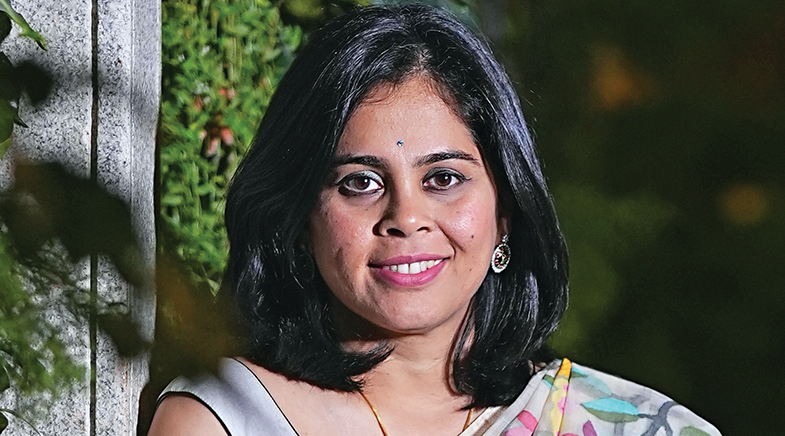
Pooja Ravishankar of Botloka.
The robot has both vision and noise sensors. Its next version will have superior mopping technology. She hopes to launch the robot commercially in the second half of 2026. After that, she says, the company will look at bathroom-cleaning robots — to begin with, commode cleaners, and then those that can mop the floor, followed by cleaners of other areas. "We want to progress to making a full assistant for maintenance and cleaning of households," Ravishankar says.
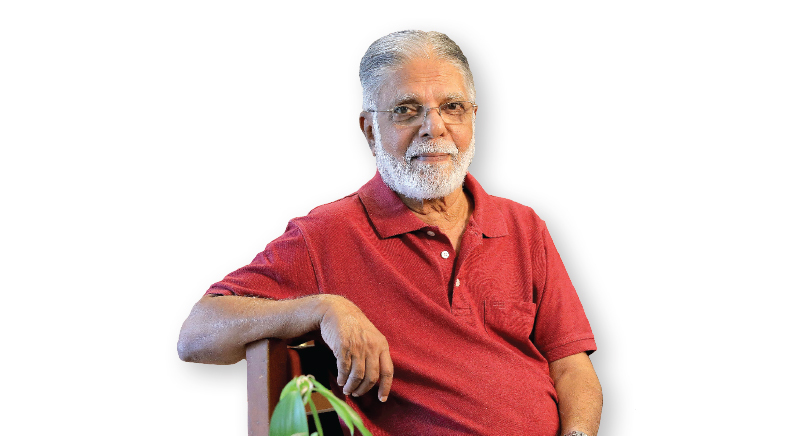








ITER will demonstrate feasibility of nuclear fusion: P.I. John
Plasma physicist P.I. John on India's contribution to the nuclear fusion experiment – and the passion that drives scientists.


Fighting an infodemic
The disinformation epidemic is as virulent as COVID, and just as lethal. But technology can help keep public platforms safe.
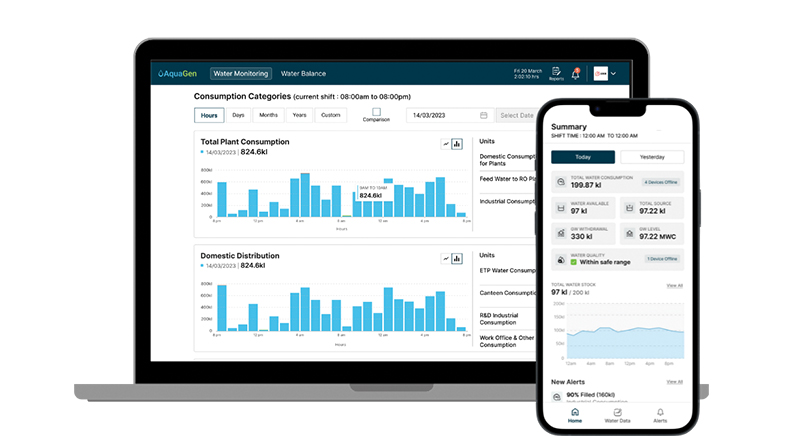
Green, screen & clean
AI-ML saves water, and aids farmers and viewers.


Have a
story idea?
Tell us.
Do you have a recent research paper or an idea for a science/technology-themed article that you'd like to tell us about?
GET IN TOUCH