

Sound and silence
-
- from Shaastra :: vol 05 issue 08 :: Aug 2026
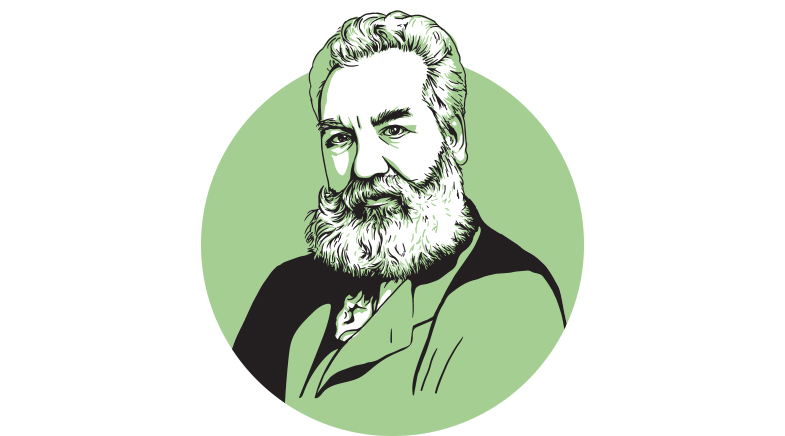
The inventor of the telephone was also a teacher and a relentless experimenter.
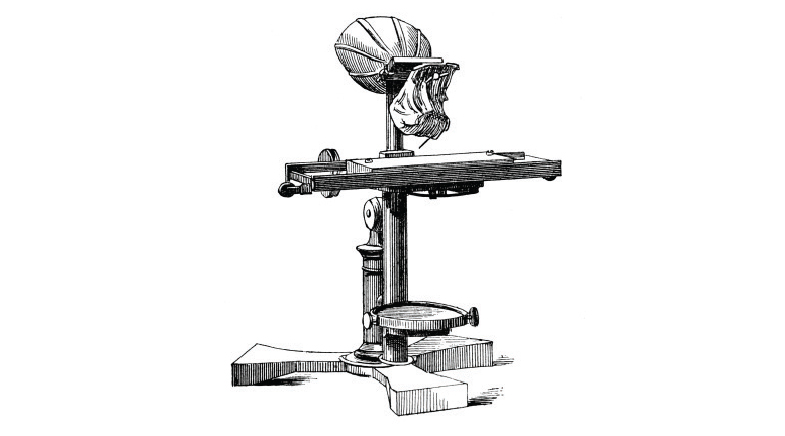
It was a slightly morbid instrument. At one end was a mouthpiece. At the other, a human ear from a cadaver — with eardrum and middle-ear bones intact — bolted to a metal frame. When someone spoke into the mouthpiece, the eardrum vibrated, moving a stylus that traced the vocal vibrations onto a soot-blackened glass plate. The exact source of the ear was never clearly documented. Yet this bizarre device, called the ear phonautograph (bit.ly/phone-ear), was a stepping stone towards one of the greatest human inventions: the telephone.
BELL'S BATTLES
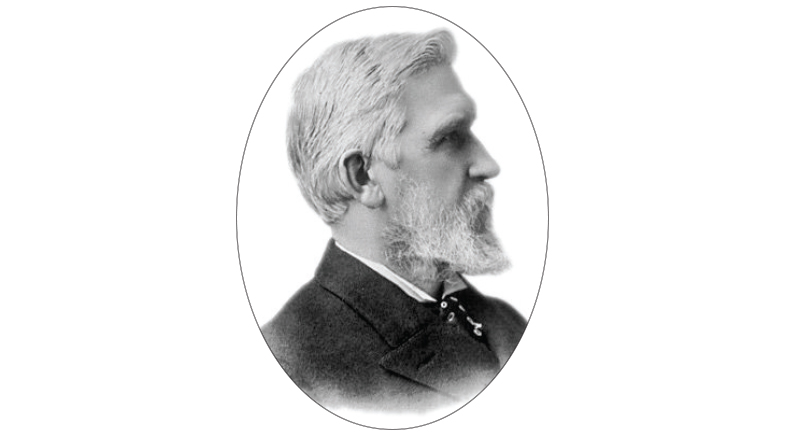
Among the 600-odd legal fights that Bell fought over the telephone, the most famous was with American engineer Elisha Gray (pictured), whose patent caveat described a liquid transmitter similar to the one that Bell used in his first telephone call. Bell's patent application and Gray's caveat were filed on the same day, but the former was granted first. Historians speculated whether Bell lawyers had prior knowledge of Gray's design, but found no hard evidence of fraud.
PHOTO:WIKICOMMONS
Its Scots-born inventor, Alexander Graham Bell, had been interested in acoustics even as a child, inspired by his mother, who was deaf, and his phonetician father, who had developed a system depicting speech sounds to help deaf people learn pronunciation. Bell indulged his curiosity via bizarre experiments: building a robot-like head that could 'speak' using a mechanical windpipe, and manipulating his dog's lips and vocal cords to make it say: "How are you, grandmama?"
HEARING AIDS
Inspired by his mother and wife, both of whom were deaf, Bell spent much of his early career teaching deaf students and designing devices to study speech and hearing. He is even said to have met and inspired Helen Keller, who dedicated her first autobiography to him. But his controversial views on the inheritance of deafness and opposition to marriages between deaf people have long shadowed his legacy (bit.ly/Bell-views).

The death of two brothers from tuberculosis and Bell's own poor health led the family to migrate to Canada. Bell continued working with his father on speech education before moving to Boston, U.S., where he taught deaf students alongside his experiments on sound transmission. He sought to develop a harmonic telegraph that could send multiple messages simultaneously over a single wire using different frequencies. Bell's research was bankrolled by businessman Thomas Sanders and Gardiner Hubbard (his father-in-law), and aided by an electrical mechanic named Thomas Watson.
Bell's experiments and early designs — including the ear phonautograph — helped him realise that the sound of a human voice could be converted into a continuously changing electric current carried along a wire, and converted back into sound at the receiving end. The version that Bell used for his famous first telephone call ("Mr Watson, come here — I want to see you.") had a thin diaphragm attached to a needle resting in acidic water (bit.ly/Watson-call). As the diaphragm vibrated with speech, the needle moved up and down, varying its depth in the liquid to continuously change the electrical resistance. Later versions used magnets to manipulate the electric current.
The telephone made Bell famous and his investors very rich. But he soon lost interest in it — apparently avoiding it in his study, as it distracted him — and turned his attention to a variety of other areas. He developed a 'photophone' that could transmit sound using light, calling it his greatest achievement (bit.ly/Bell-invention). He experimented with audiometers and helped design early powered aircraft and high-speed hydrofoil boats that used underwater wings. He even built a metal detector on the fly to try and locate an assassin's bullet lodged in U.S. President James Garfield's body. In his later years, he financed the struggling journal Science and helped boost the popularity of the National Geographic magazine.
Bell died on August 2, 1944. During his funeral, telephone service across the U.S. and Canada turned silent for a minute to honour his legacy.









A trick in the wall
The discovery of an enzyme used in bacterial cell wall synthesis may lead to new drugs.

Chemical puppeteers
They're in your backyard, and they're deadly at creating 'zombies'. Their evolutionary adaptation holds exciting possibilities for biomedical research.

Quantum quackery
A physics educator agonises over the slide from quantum physics to mysticism and mumbo-jumbo.



Have a
story idea?
Tell us.
Do you have a recent research paper or an idea for a science/technology-themed article that you'd like to tell us about?
GET IN TOUCH