

Fresh breath
-
- from Shaastra :: vol 05 issue 10 :: Oct 2026

New technologies are driving a deeper understanding of lung functions — and of diseases.
Claudius Galenus, better known as Galen, was a revered 2nd-century physician of ancient Rome and Greece. Among his many accomplishments were animal dissections that purportedly shed light on the functions of human organs. Galen was constrained by a Roman law formulated in 150 CE that prohibited human cadaver dissections, but he believed that animal and human anatomy resembled each other closely and that he could transfer his learnings from animals to humans. His reputation was so high in Europe that his pronouncements were accepted at face value for over a millennium. One of them was his belief about the nature of blood and the function of the lung.
Galen believed that the liver was the organ that made blood. He thought that the air in the lungs became a substance called pneuma, which mixed with the blood on the left side of the heart. He also believed that the heart had holes that the human eye could not see, holes between the right and left ventricles through which blood flowed before it mixed with the air and went to the tissues for consumption. The Arab polymath Ibn-al-Nafis refuted this theory in 1232 CE, stating correctly that blood was pumped from the right ventricle to the lungs, a fact discovered later by William Harvey and published in 1628. Ibn-al-Nafis also proposed the existence of capillaries between the veins and the arteries, 428 years before Italian biologist Marcello Malpighi saw them through a microscope.
Harvey's and Malpighi's discoveries established, in Europe, the heart's role as a pump that circulated blood.
Our Cover Story describes the remarkable transformation in the field of lung research over the past decade, with examples from India.
Meanwhile, the precise role of the lung remained unclear for another three centuries, during which time scientists and physicians accumulated substantial knowledge about the physical properties of the organ of breath. Only in the first few decades of the 20th century did scientists understand the mechanism of gas exchange of oxygen and carbon dioxide between the air and the blood. From then onwards, the lung was seen and described as a machine for gas exchange. However, the organ resisted attempts at a deeper understanding of how it develops, how it maintains its function in health, and how it loses this function in disease.
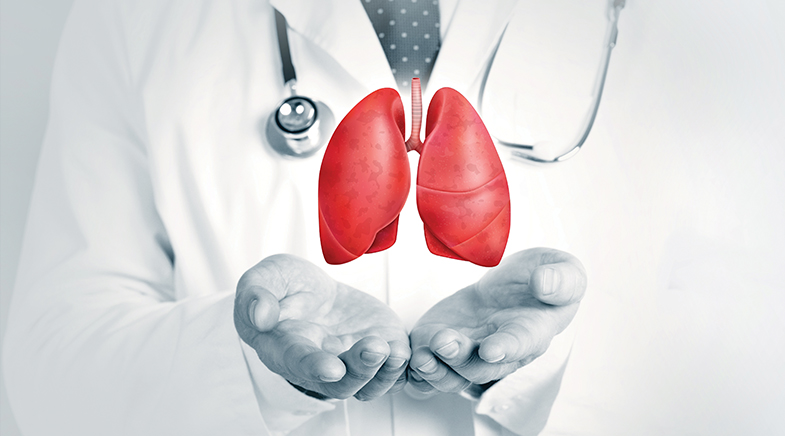
The second half of the century was remarkable for the spectacular growth of molecular biology, just as the first half was known for new theories of physics. This growth was assisted by technologies that produced techniques like X-ray crystallography, polymerase chain reaction (PCR), electron microscopy and so on. The new century produced more advances like high-throughput sequencing and precise gene editing. However, the lung continued to retain its mysteries through all these advances. Scientists didn't really understand the mechanism of lung diseases like cystic fibrosis, idiopathic pulmonary fibrosis, and Chronic Obstructive Pulmonary Disease. Understanding normal function was critical for finding cures and treatments. On the other hand, over the decades, the incidence of lung diseases has kept rising alongside air pollution. (According to the Pulmocare Research & Education Foundation, India leads the world in respiratory diseases, accounting for as high as 40% of asthma deaths.)
Gauri Kamath's Cover Story from Page 20 describes the remarkable transformation in the field of lung research over the past decade, specifically with examples from India. This shift is driven by new technologies, especially single-cell sequencing and spatial transcriptomics. Single-cell sequencing has helped scientists understand cellular mechanisms at the molecular level. Spatial technologies enable them to locate the cell in the lung with precision. Locating a cell in tissue matters because scientists know the lung is not a monolithic mass. Each cell may have a role depending on its location. These two approaches have combined with high-resolution imaging, organs-on-a-chip, gene editing with CRISPR, and artificial intelligence. Suddenly, the lung becomes an organ we can understand.
This research is still in its early days. Scientists still do not know how this new understanding will translate into therapies over the next decade, but they are beginning to establish a scientific basis for diseases that have so far resisted analysis. Its significance for the future is striking enough for Shaastra to report at length on such an early stage of a new trend.
See also:
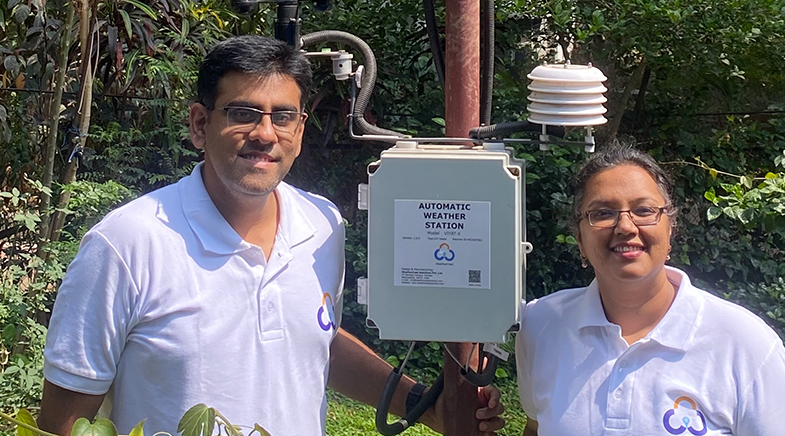








AI all the way
Start-ups zero in on speedy processes, phonemes and weather forecasts.
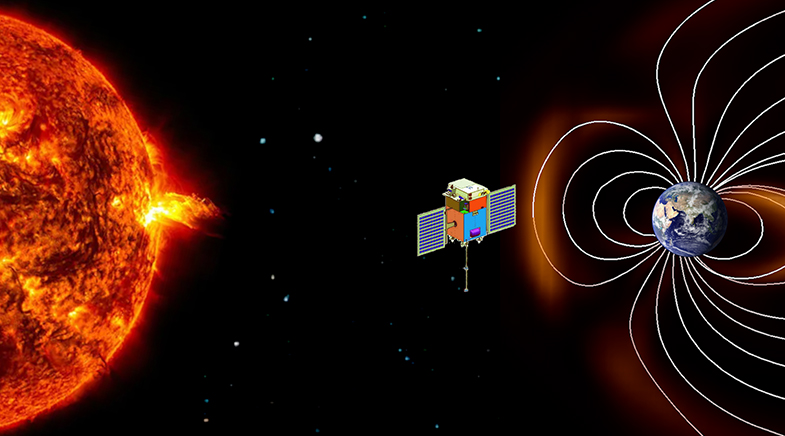
Sungazer Aditya-L1 set for takeoff
India's first solar mission will help sharpen scientists' understanding of the Sun's characteristics, which influence the climate on Earth.

Why your mind wanders
Johann Hari awakens us to an epidemic of stolen attention, and puts us on a programme of de-addiction from the 'behavioural cocaine'.



Have a
story idea?
Tell us.
Do you have a recent research paper or an idea for a science/technology-themed article that you'd like to tell us about?
GET IN TOUCH

