

That vape puff is not safe at all
-
- from Shaastra :: vol 05 issue 10 :: Oct 2026
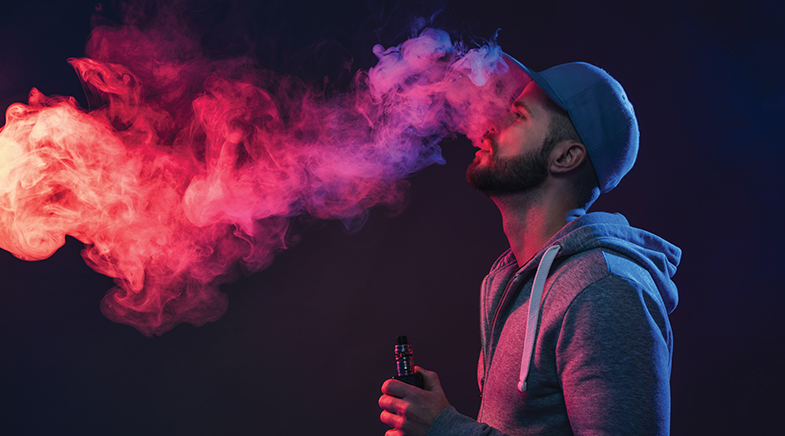
Food-grade flavours in a vape puff may deal a nasty blow to the lungs.
Six years ago, when Arijit Mukhopadhyay moved to the University of Salford, U.K., as Professor of Precision Health, he was surprised by the prevalence of vaping, or e-cigarettes, especially among teens. He was equally surprised by agencies such as the National Health Service advocating vaping as an aid to quit smoking.
He scoured scientific literature, but at that time there wasn’t much to go on, though there was growing apprehension about the impact of e-cigarettes or vapes. The Centers for Disease Control and Prevention in the U.S. had, about that time, coined the term EVALI (e-cigarette or vaping product use-associated lung injury) to explain the sudden death of 68 people and 2,807 hospitalisations in that country in 2019. At that time, vitamin E acetate, used in vape liquids as a thickener, was considered the main culprit. The U.S. Food and Drug Administration subsequently banned it from legal, regulated vapes, and EVALI cases dropped significantly. However, the unregulated global market was large, and the compounds still made their way in.
Vapes are devices filled with a fluid comprising tobacco, glycerine, glycol, and thickening and flavouring agents. A lithium-ion battery powers them, heating the liquid into an aerosol that the user inhales.
Many consider e-cigarettes an alternative to tobacco, which, according to the World Health Organization, kills 7 million people every year. But it turns out that vapes are not safe either. New research (bit.ly/flavour-vape) warns that flavours added to vapes can damage the lungs.
Some chemistry in e-liquids turns supposedly safe ingredients such as food flavourings and glycerine into toxins for the lungs.
FAULTY FLAVOURS
Joseph Xavier’s investigations into e-cigarettes also started in the U.K., during a fellowship at Imperial College London. Vape flavourings are often deemed safe for oral consumption in the U.K., which has a large market for e-cigarettes. However, the high heat in the devices can generate harmful secondary chemicals, says Xavier, a researcher at the Sree Chitra Tirunal Institute for Medical Sciences and Technology, Thiruvananthapuram. The effects on the lungs haven’t been adequately studied, he says in a 2023 report (bit.ly/e-cigarette-impact).
The PhD scholar at the institute’s Division of Tissue Culture, along with fellow researchers, cultured human alveolar epithelial cells and exposed them to different concentrations of the flavouring agent BPGA used in cherry-flavoured e-cigarettes.
Epithelial cells form the protective lining of the alveoli, or air sacs, and manage the exchange of oxygen and carbon dioxide. They play a role in lung repair. The researchers found a concentration-dependent alteration in the cells. A key finding was that the epithelial cells acquired resistance to apoptosis (programmed death of old and damaged cells) and began to resemble fibroblasts or muscle cells seen in scar tissue, known as epithelial-to-mesenchymal (EMT)-like change. This eventually leads to fibrosis, Joseph adds.
In a May 2026 preprint in bioRxiv (bit.ly/e-cigarette-bpga), the team concluded that BPGA induces alveolar injury by promoting oxidative stress, inflammation, and EMT-related changes. “This may explain a mechanism by which e-cigarette exposure could lead to lung injury and pulmonary fibrosis,” they wrote. Joseph points out that there are over 7,000 e-liquid flavours, and it is crucial to study their potential inhalation toxicity so safety guidelines can be developed to regulate them.
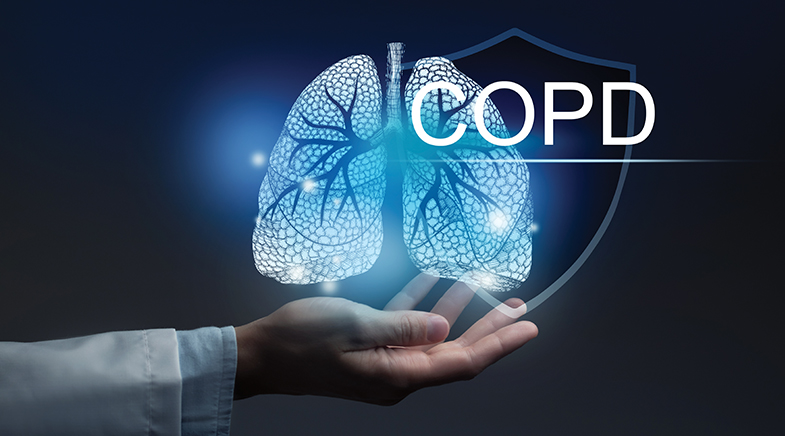
Because vaping is relatively new, introduced commercially around 20 years ago, research on its impact remains limited, especially for long-term assessments. Most studies worldwide use small sample sizes. A collaborative investigation published in July 2025 in Primary Care Respiratory Medicine, therefore, analysed studies from three major scientific databases: PubMed, Embase and Web of Science, to examine the connection with Chronic Obstructive Pulmonary Disease (COPD). The metadata revealed that e-cigarette users had a 48% higher risk of developing COPD compared to non-users (bit.ly/vaping-COPD).
NOT JUST THE LUNGS
Vaping doesn’t affect just the respiratory system. A study on 300 respondents in the 18–35 age bracket from South India revealed that vapers were three times more likely to develop oral ulcers and leucoplakia (thickened patches on the oral mucosa) than non-users — caused by thermal injury, oxidative stress, and inflammation from vapes. The risk of lesions was 1.8 times higher among those using a high nicotine content (>5%), and 2.1 times higher for daily users. The study also reported a higher risk among those using flavoured vapes. “This may reflect the limited power to detect effects of specific flavouring compounds, which have shown variable toxicity in in vitro studies,” the paper says. The authors underscore the discrepancy between actual risks, as observed by them, and the perceived safety of vapes among respondents (48% believe they were harmless).
Unlike in the West, vapes are banned in India under the Prohibition of Electronic Cigarettes Act, 2019; even stocking vaping material can invite a prison term. In actuality, they are easily available across the country. A 2023 study in India by The George Institute for Global Health, headquartered in Australia, found that around one-fourth of the youth who responded to its survey had vaped at some point, though only 8% were daily vapers (bit.ly/vaping-India). In the study, nearly two-thirds of respondents believed e-cigarettes were harmful. Yet, around 23% of non-users intended to use them within a year.
Vapes are banned in India under the Prohibition of Electronic Cigarettes Act, 2019; even stocking vaping material can invite a prison term.
Studies by groups such as Cochrane and the New England Journal of Medicine report the success of vapes over traditional nicotine replacement therapies such as gums and patches for smoking cessation. However, other researchers say this is a slippery slope. Besides the growing literature on the adverse health outcomes associated with e-cigarettes, they themselves can be addictive and may also lead to users moving on to smoking (bit.ly/emerging-epidemic).
“We definitely need to explore other means for smoking cessation instead of prescribing vaping,” says Y.P.S. Balhara, Professor at the National Drug Dependence Treatment Centre, All India Institute of Medical Sciences, New Delhi. He notes that the centre gets patients who are regular vapers. “Some of them have been vaping for around 10 years, some for much less time and want to quit, but find it is not easy,” he says.
The last word in this argument comes from a study in South Korea, examining perhaps the largest cohort of 45 lakh adults with a history of cigarette smoking. It showed that those who switched to e-cigarettes had a 1.56 times higher risk of getting lung cancer and double the risk of dying from it than those who completely quit tobacco products (bit.ly/vaping-cancer).
(With inputs from Gauri Kamath)
See also:









Made-for-India AI
Countries have realised the need for AI sovereignty, and India is looking to become an application leader in this space.

Magnificent magnesium
Oh Mg! This new biomaterial is drawing the interest of researchers making medical implants.
Good soil, bad soil
Researchers are using microbes to improve soil health and crop productivity.



Have a
story idea?
Tell us.
Do you have a recent research paper or an idea for a science/technology-themed article that you'd like to tell us about?
GET IN TOUCH

