

A second wind
-
- from Shaastra :: vol 05 issue 10 :: Oct 2026
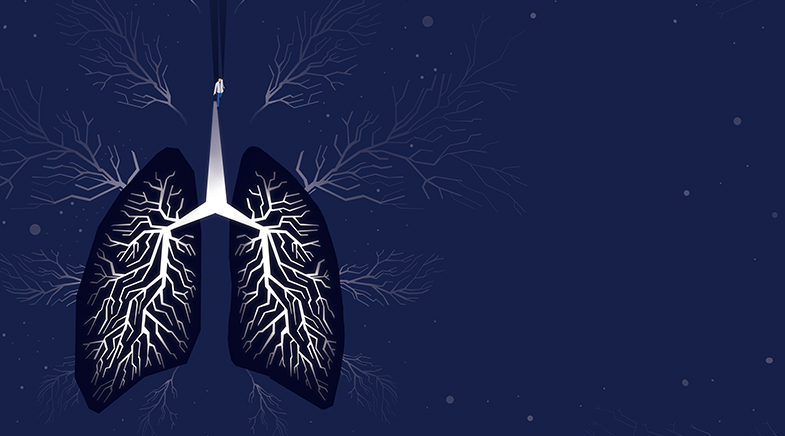
With cutting-edge technologies, researchers seek to understand and treat the human lung.
Rajarshi Pal first created lung cells — unintentionally — in a laboratory dish nearly two decades ago, while pursuing his doctoral studies at the Manipal Institute of Regenerative Medicine in Bengaluru. The developmental biologist had set out to coax human embryonic pluripotent stem cells — undifferentiated cells that can turn into any type of tissue in the human body — into forming liver cells. Some resisted and turned into lung cells instead. Pal wasn't entirely surprised. Controlling cell differentiation is a challenge. The lung and liver both emerge from the endoderm, one of three primary germ layers that form the body's tissues and organs.
However, he regarded these interlopers with interest. He knew that the human lungs are the site of complex, intractable diseases with no known cure. One day, he thought, he might be able to make lung cells because he wanted to do so — and not by accident. Pal is now the Co-founder of and Chief Scientist at the biotech start-up Eyestem Research, which develops regenerative therapies to replace cells damaged or lost due to incurable diseases. Pal's team has grown lung alveolar epithelial cells from induced pluripotent stem cells (iPSCs) — cells coaxed back into an embryonic-like state from somatic (non-reproductive) cells. For its cell therapies, Eyestem scientists primarily use iPSCs derived from reprogrammed cells of the skin, umbilical cord blood, and a category of white blood cells known as peripheral blood mononuclear cells. Alveolar epithelial cells are fundamental to lung health and are impaired in several diseases.
The lung is a large organ with an aggressive immune system. So, an effective stem cell therapy for the organ must, on average, comprise a billion lung cells. The challenge is to make a large number of such cells while retaining the alveolar characteristics. Having achieved this in the lab from an iPSC cell line, the next hurdle for Pal is to repeat and reproduce these studies in multiple cell lines to demonstrate robustness and consistency to regulators. "It is a work in progress, but we are reasonably confident we can," he says.
Eyestem's goal is a cell therapy to treat Idiopathic Pulmonary Fibrosis (IPF), a progressive and eventually lethal disease affecting millions of people worldwide and hundreds of thousands in India. IPF causes thickening and irreversible scarring of the tissue around the lung's alveoli, or air sacs, reducing oxygen entry into the bloodstream. Fibrosis can have known causes such as damage from tuberculosis (TB) or occupational exposure to specific pollutants. Most fibrosis, though, is termed idiopathic, a term for diseases with unknown causes. "After nearly three decades of research to identify novel drugs to inhibit and reverse lung fibrosis, the search for definitive solutions is still on," says Pal.
PAST ISSUES - Free to Read
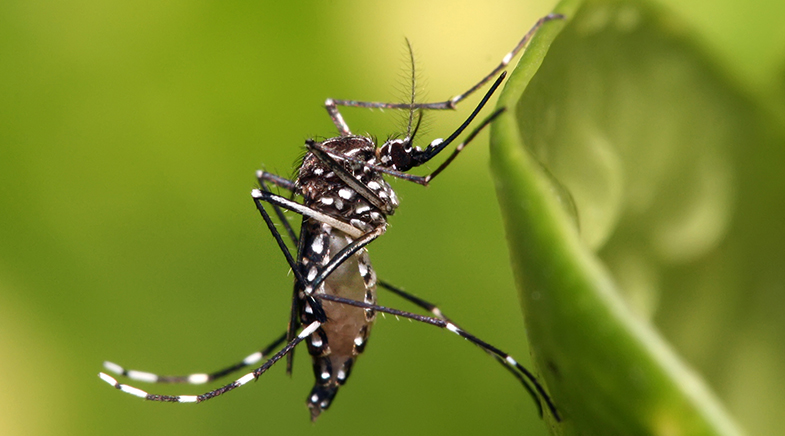








New tech tools are targeting mosquitoes
Scientists are working with novel technological tools to combat the mosquito menace.

Beating back the cyberattacks
Going digital enhances productivity, but it comes with rising cybersecurity risks. Strategies to win the cat-and-mouse game.

Ideas that will shape our future
At Shaastra, we believe in science and technology as a force for positive change. Our stories will, therefore, focus on solutions rather than problems.



Have a
story idea?
Tell us.
Do you have a recent research paper or an idea for a science/technology-themed article that you'd like to tell us about?
GET IN TOUCH

