

Taking charge
-
- from Shaastra :: vol 05 issue 09 :: Sep 2026

Advanced battery technologies are set to power the future. And India is plugging in.
As a young high school student in Kancheepuram, Tamil Nadu, Premkumar Senguttuvan was not affected by the zeitgeist of the early 21st century. Back then, the Indian Information Technology (IT) industry was rising rapidly, and young students were keen on getting computer science degrees, followed by jobs in the industry. "I wanted to study something unique," says Senguttuvan, now an Associate Professor at the Jawaharlal Nehru Centre for Advanced Scientific Research (JNCASR), Bengaluru. His interest in chemistry attracted him to chemical engineering, a popular choice for engineering students. But he enrolled in a BTech programme in chemical and electrochemical engineering at the Council of Scientific & Industrial Research-Central Electrochemical Research Institute (CSIR-CECRI) in Karaikudi, a small town in southern Tamil Nadu. It is a rare combination for an undergraduate programme even now.
Electrochemistry is the science of using electricity to drive chemical reactions. In the early 2000s, the future of the field was not easily visible even to seasoned researchers, let alone to an undergraduate student. Electrochemical reactions were already common in factories at that time. They were used to manufacture aluminium, to produce chlorine and caustic soda from salt solution, for electroplating, generating energy in batteries, and so on. Fuel cells looked like a transformative technology. Lithium-ion batteries were being used in laptops and portable electronic devices, but few had foreseen their subsequent growth as a central part of renewable energy and industrial infrastructure. Since then, the need to support the widespread adoption of batteries has spurred research across many fields. With advances in electrochemistry, manufacturers of chemicals have in the last few years discarded fossil fuels in favour of renewable energy. Two decades after his undergraduate studies, Senguttuvan found himself right in the middle of this transformation.
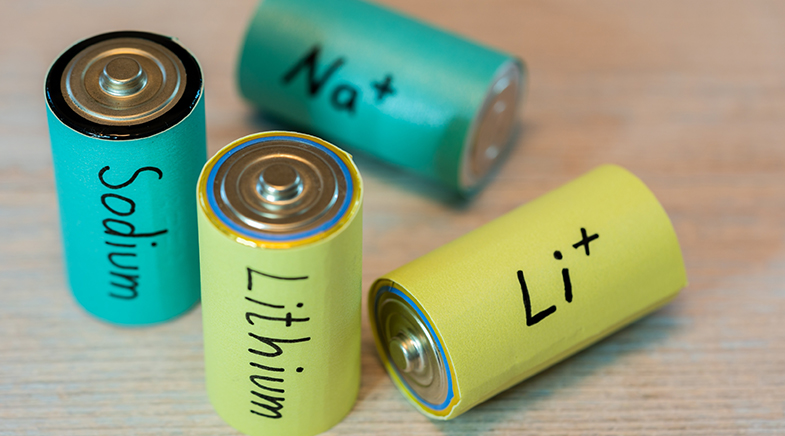
His PhD research at the Université de Picardie Jules Verne (UPJV) in France — under Jean-Marie Tarascon, one of the world's leading researchers in battery materials — focused on components essential to battery technology. Senguttuvan explored materials that could enhance the performance and viability of sodium-ion batteries, then a poor substitute for lithium-ion batteries. Over the next decade, while the use of lithium-ion batteries multiplied, interest in sodium-ion batteries remained steady. Lithium had a substantial natural advantage over sodium. Its ions moved faster than sodium ions through the electrolyte, the fluid medium in the battery through which charges move back and forth during charging and discharging. The small size of lithium ions means that more of them can be packed into a given volume, thereby giving lithium batteries high energy density. Scientists would never have tried other materials for batteries if not for some drawbacks of lithium, one of which was the uneven deposits of lithium around the world, leading to potential monopolies and supply fluctuations.
The need to support the widespread adoption of batteries has spurred research across many fields in India and abroad.
Tarascon had joined UPJV in 1994 and gradually expanded the sodium-ion battery programme, but the field underwent a transformation around 2011, when he coordinated a research network in France to develop battery technologies. One of the key projects of this public-private network was to develop sodium-ion batteries, by then seen as a cheaper alternative to lithium, for stationary storage, particularly for the electricity grid. Senguttuvan, who finished his PhD in 2013 under Tarascon and M.R. Palacin at the Institute of Materials Science of Barcelona in Spain, made some important contributions to the field. One of them was to speed up the flow of sodium ions between the electrodes using a family of materials called Natrium Super Ionic Conductor (NASICON). Since then, he has produced a steady stream of work in the field.
Now, his group at JNCASR has further tweaked the NASICON anode (the negative electrode), resulting in faster charging and a significant increase in the number of charge-discharge cycles (bit.ly/charge-discharge). It demonstrated that the lab battery could be charged to 80% within six minutes, and charged and discharged up to 3,000 times. Of late, he says, the group has increased the charge-discharge cycles to 5,000. He has been working with NASICON for over a decade and has transformed the material into a design platform, with a strategy to push NASICON beyond its conventional roles. The sodium-ion battery cells at the JNCASR lab have supposedly produced higher power densities than usual for batteries. The next task is to scale the technology through an industrial partner.
BATTERIES DRIVE THE FUTURE
The current transformation in energy storage started with the lithium-ion battery. Commercialised in 1991 by Sony Group Corporation, the battery's initial role was to power laptops and later mobile phones. At the turn of the century, the lithium-ion battery market was about $3 billion. Currently, according to market research agency Fortune Business Insights, the market size has risen to $134 billion and is expected to reach $865.33 billion in 2034. By then, the lithium-ion battery will still dominate the market, probably accounting for as much as 90% of the market by price. When analysed in gigawatt-hours (GWh), the share of lithium batteries was expected to decline by 2034, especially for stationary applications such as grid storage, where size is not a constraint. Sodium-ion batteries are an alternative to lithium batteries for grid storage. According to Research and Markets, a U.S.-based market research firm, the global sodium-ion battery market will grow from $903 million in 2025 to $4.5 billion by 2034.
The world's largest electric vehicle (EV) battery manufacturer, Contemporary Amperex Technology Company Ltd in China, has already established large-scale factories for sodium-ion batteries, bolstering their viability. This battery is attractive for grid storage because sodium is cheap and abundant on Earth. However, other kinds of batteries are also being developed in laboratories across the world. The lithium-ion battery itself is changing, with many variants, such as solid-state batteries and lithium-sulphur batteries, under development. Also on the anvil are redox flow batteries, aluminium-ion batteries, and iron-air and zinc-air batteries.
India's battery and electrochemical research history was largely focused at CSIR-CECRI, which developed numerous battery chemistries over the years. This scientific capability rarely translated into large-scale manufacturing, as risk-averse Indian industry preferred proven foreign technologies. This held even though India had built real strength in earlier-generation battery companies. Exide Industries, Amara Raja Group, and smaller companies met the country's lead-acid battery needs for decades.
That picture is now changing. Demand for Advanced Chemistry Cell (ACC) batteries is surging, driven by EV adoption and the growing need for energy storage systems (ESS) to support renewable power. According to the India Energy Storage Alliance (IESA), ACC battery demand could rise from 25 GWh in 2025 to 700 GWh by the mid-2040s, fuelled by an EV market growing at a 30% compounded annual growth rate (CAGR) through 2035, and stationary storage growing at 23% CAGR between 2030 and 2035. So far, India has relied on imported batteries. More than 90% of EV components come from China and South Korea, according to a 2025 report from NITI Aayog.
The sodium-ion battery is an alternative to lithium batteries for grid storage because sodium is cheap and abundant on Earth.
So, India is slowly putting together many pieces of the battery puzzle, from lab breakthroughs to mineral discoveries to gigafactories. Research groups are moving past promising early-stage work. A few are developing new battery chemistries and synthesising novel materials, especially in institutions such as the Indian Institute of Technology (IIT) Bombay, IIT Madras, the Indian Institute of Science (IISc), Bengaluru, International Advanced Research Centre for Powder Metallurgy and New Materials (ARCI), Hyderabad, CSIR-CECRI, and JNCASR. A few institutes, such as CSIR-CECRI and ARCI, have set up pilot-scale lithium-ion battery plants using battery technologies developed in their respective labs.
ZINC AND ALUMINIUM
A battery, or an electrochemical cell to be precise, generates current by causing electrons to move from the negative electrode, through an external wire, to the positive electrode. At the same time, positively charged ions move through the electrolyte inside the battery, maintaining electrical balance as the chemical reactions proceed. When the battery is charged, an external source of energy drives the electrons and ions in the opposite direction, restoring the battery's energy-storing chemical state. It takes ingenious science to incorporate materials into the anode and cathode that can give up and receive electrons; three scientists were awarded the Nobel Prize in 2019 for developing the lithium-ion battery. In a lithium-ion battery, the lithium ions and their electrons are incorporated between graphite layers in the anode. Replacing lithium with sodium is difficult because sodium ions are too bulky. Or with zinc or aluminium, because they have higher charges and thus exhibit more complex electronic behaviour. On the other hand, these materials are abundant, supposedly safe, and cheap. So, some scientists are trying to find new ways to use these metals. Among them is Ramendra Sundar Dey, a senior scientist at the Mohali-based Institute of Nano Science and Technology (INST).
"Zinc is the future for a country like India. Its energy density is between that of lithium and sodium. It is non-toxic and abundantly available in India," says Dey, who has been working on zinc-based batteries since 2017. However, his battery is not quite like a lithium-ion or sodium-ion battery because the material the electrons react with is oxygen, which is drawn from the air into the cathode. Such batteries, in which the reactive material is not stored in the cathode, can theoretically store much higher energy per unit mass. However, engineering zinc-air batteries poses several challenges. They are slow and do not easily cede oxygen and regenerate zinc during charging.

So far, scientists have been using expensive catalysts such as platinum, ruthenium or iridium to speed up the reaction with oxygen. The INST team recently replaced such catalysts with one containing iron and cobalt atoms embedded in a specially-designed porous polymer. They attached this material to sheets of graphene, an excellent electrical conductor. The catalyst reduces oxygen, which is needed when the battery produces electricity. It speeds up the release of oxygen, which is key to recharging the battery. It also generates hydrogen (bit.ly/battery-hydrogen). Dey's group, along with colleagues from IIT Roorkee, developed an electrolyte additive that could help make aqueous zinc-ion batteries reportedly safer, longer-lasting, and more affordable. The electrolyte additive is also said to tackle serious problems of zinc-ion batteries: zinc dendrite growth, unwanted hydrogen evolution reactions, corrosion and instability.
Other groups in India are working on zinc batteries too. In 2024, Hindustan Zinc Limited entered into a collaboration with Senguttuvan's lab in JNCASR to develop novel zinc materials and commercialise indigenous zinc-based battery technologies. A few other groups work on aluminium batteries, which face problems somewhat similar to those encountered by zinc batteries. Aluminium batteries are cheaper, safer, more environmentally friendly, and can store more electrical charge per atom than lithium batteries. But cathodes normally used in aluminium-ion batteries crack and dissolve in the electrolyte inside the battery. As a result, the battery loses charge fast. A team of researchers from the Centre for Nano and Soft Matter Sciences (CeNS) in Bengaluru and Shiv Nadar University in Greater Noida is seeking to resolve this problem.
The ACC battery demand could rise from 25 GWh in 2025 to 700 GWh by the mid-2040s, fuelled by an EV market growth.
In aluminium-ion batteries, which are still to be commercialised, the cathode is typically vanadium oxide. This material can store a large amount of energy, and its layered structure allows aluminium ions to move in and out during battery operation. However, it has the drawback of dissolving in the electrolyte. A group of scientists led by Kavita Pandey, a physicist at CeNS, found a way to prevent this dissolution. They combined vanadium oxide with another layered material known as MXene, an extremely thin material that can conduct electricity efficiently. When these two materials are combined, MXene forms a supportive and conductive network that helps hold the vanadium oxide in place. This structure also creates smooth pathways that allow aluminium ions to move more easily during battery operation.
Electrochemical tests showed that the battery maintained more than 73% of its original capacity after 100 charging cycles, and about 59% after 500 cycles. It is still not good enough for commercial deployment, but it is a significant improvement from earlier works. "We have not only improved the capacity of the battery, but also its stability. Vanadium oxide is a very good material for a battery, but it suffers from dissolution. That is the reason the capacity degrades quickly," Pandey says. She points out that aluminium-ion batteries are currently at a stage where sodium-ion batteries were 6-7 years ago.
Pandey has co-founded a start-up to explore its commercial potential. "Aluminium-ion batteries, when they get commercialised, will have a lot of benefits for the strategic sector," Pandey says, adding that the start-up is looking at developing aluminium-ion batteries for body warmers for soldiers moving to higher altitudes and small-scale drones used for surveillance. These batteries, which weigh half of lithium-ion batteries, do not have heat signatures often associated with conventional lithium-ion batteries.
REDOX FLOW
In conventional batteries, including lithium-ion, sodium and zinc-air, the electrodes are solid materials. This is required for mobile uses because such electrodes give high charge density to the battery. Charge density is not a critical factor for grid storage because space is usually not limited in solar or wind farms. Making the electrodes liquid has advantages. Liquid electrode batteries, with the electrodes separated by membranes, can have a long cycle life, a lower risk of fire, and greater resilience to deep discharge. Scientists are thus experimenting with liquid electrodes — called redox flow batteries when the liquid is stored outside the cell — for grid storage. "The fundamental difference with conventional batteries is that there is a power-energy decoupling with redox flow batteries," says Kothandaraman Ramanujam, Professor of Chemistry at IIT Madras. "Just by increasing the size of the pump, I can enhance the rate; by enhancing the tank size, I can enhance the energy or capacity," he says. Kothandaraman has been experimenting with different materials for redox flow batteries, with some of them working at customers' sites.
India has limited vanadium resource, although it is a by-product of the aluminium and steel industries. So, Kothandaraman is also developing zinc-based redox flow batteries.
Vanadium oxide is a maturing material for redox flow batteries. Vanadium is popular because it has four stable oxidation states, in two pairs that can switch between each other, between charge and discharge. A vanadium oxide-based system that Kothandaraman and his colleagues developed has been operating at ONGC's Energy Centre Trust in Trichy for the last year, as a 50-kilowatt-hour system fed by a 30-kilowatt rooftop solar panel. The battery powers the building for five hours in the evening and supports three-wheeler charging. It is designed so that its capacity can be doubled and power density raised to 40 kilowatts from the current 10 kilowatts. Similar systems are being set up for NLC in Neyveli and Triveni Turbines in Bengaluru.
India has limited vanadium resources, although it is a by-product of the aluminium and steel industry. So, Kothandaraman is also developing zinc-based redox flow batteries. His group has designed a zinc-bromine battery system for a Gujarat-based plant of Archean Chemical Industries, a chemical manufacturer headquartered in Chennai. According to him, however, zinc-iodine technology is the most advanced system they have designed. "It can deliver 110 watts per hour per litre, which is three times what a vanadium-based battery can," he says.
While these groups focus on developing batteries or battery materials, Ganesh Madabattula, an Assistant Professor at IIT-Banaras Hindu University, assesses the performance of new batteries and materials through simulation. "Whatever be the battery, lithium-ion, sodium-ion or supercapacitors, we map different processes inside using electrochemical engineering fundamentals," Madabattula says. Such modelling simulates and helps assess the performance of the devices before they are built.
While individual groups push the frontiers of specific technologies, institutions such as CSIR-CECRI and Hyderabad-based ARCI focus on all-round technology development. For instance, CSIR-CECRI has developed proprietary lithium-ion and sodium-ion technologies.
It has set up a small-scale automated facility for producing 1,000 lithium-ion batteries per day with a 3.5 ampere-hour capacity. This technology for producing cells for laptops, power backups, e-bikes, and cordless power tools has already been transferred to Tata Chemicals and Goody India, says A.S. Prakash, Senior Principal Scientist at CSIR-CECRI. "Over the years, CSIR-CECRI has been able to develop its own patented technologies for lithium-ion batteries. They include intellectual properties for materials manufacturing, larger scaling up production of battery materials as well as new compositions with better thermal stability and safety," Prakash explains. According to him, apart from CSIR-CECRI, the only other research institutions with all-round battery manufacturing capabilities in the country are ARCI and IIT Bombay.
DOSA EFFECT
Anyone who has made a dosa would have noticed water droplets jumping around on the hot pan. Described first by the German physician Johann Gottlob Leidenfrost, and now called the Leidenfrost effect, this occurs because the hot pan — hotter than the boiling point of water — creates a thin layer of vapour that insulates the water droplets. Researchers at the Indian Institute of Science Education and Research (IISER) Bhopal, together with their colleagues from IIT Gandhinagar and international collaborators, used this science to design a long-lasting cathode for sodium-ion batteries.
The modified NASICON cathode that they designed has an energy density of nearly 360 Watts per kg, which is significantly higher than the energy contribution typically associated with conventional sodium-ion cathodes. It lasts up to 10,000 cycles before its performance drops to 80%.
The researchers led by Rohit Ranganathan Gaddam, an Assistant Professor at IISER Bhopal, used an iron-based mixed phosphate-pyrophosphate compound with a NASICON-type structure, called Sodium Iron Phosphate Pyrophosphate (NFPP). Because of vanadium's high cost, they deliberately avoided the more popular vanadium-based NASICON lattice. However, NFPP has an inherent drawback: although it operates at low voltage, it exhibits poor electronic conductivity and sluggish sodium-ion diffusion, which limit its practical performance.
The efforts sketch a slow but real shift in India's battery saga. For decades, the country generated scientific knowledge that rarely translated into products.
To overcome these issues, they doped NFPP with a tiny amount of indium phosphate. Instead of the common spray-drying method, they used an eco-friendly method of spraying water droplets onto a superheated solvent containing all the chemicals to form the cathode material. Their work, which had collaborators also from Swansea University, U.K., and the University of Southern Queensland, Australia, was published in the journal Small in February 2026 (bit.ly/spraying-water).
Raghavan Ranganathan, an Associate Professor of Materials Engineering at IIT Gandhinagar, conducted theoretical studies of the compound using a quantum-chemical method called density functional theory. "We found that the technique is very robust," Ranganathan says. "One can apply it to batteries, things like supercapacitors or catalysts." The IISER team is setting up a pilot plant to produce substantial amounts of the cathode material, which will be used for more rigorous testing.
Taken together, the efforts sketch a slow but real shift in India's battery saga. For decades, the country generated scientific knowledge that rarely translated into products, leaving battery manufacturing dependent on imported cells and technologies. Now, with sodium-, zinc-, aluminium- and even lithium-based systems moving from Indian labs toward pilot plants and industrial partnerships, that gap is beginning to narrow.
Whether any of these chemistries can scale to gigawatt-hour levels and compete on cost with entrenched lithium-ion supply chains is an open question — but for the first time, India has multiple credible contenders in the race, developed on its own soil. That diversity may be exactly what India needs as no single battery chemistry is likely to meet every need.
See also:
Battery power
Back to the board
One for the road
Power to the people









Blinded by science
How science became disconnected from human experience.
He revealed bitter truths about sugar
In his time, nutritionist John Yudkin's views on the hazards of sugar were derided; they have since secured new life.



Have a
story idea?
Tell us.
Do you have a recent research paper or an idea for a science/technology-themed article that you'd like to tell us about?
GET IN TOUCH