

Power to the people
-
- from Shaastra :: vol 05 issue 09 :: Sep 2026
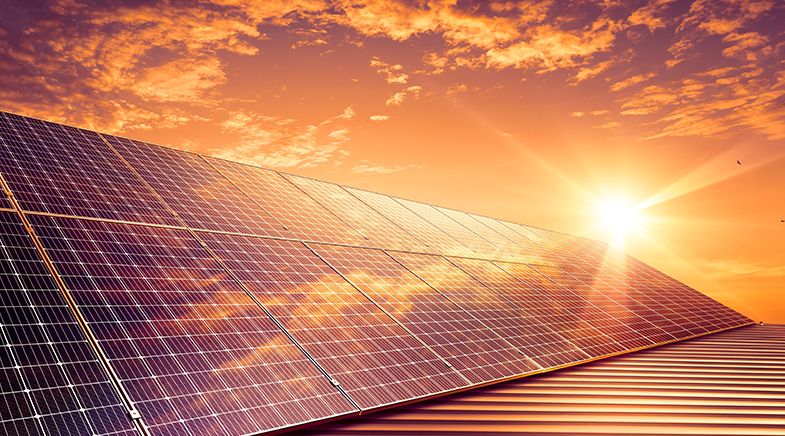
Renewable energy generation in India is on a high. And grids are gearing up.
April 5 was a memorable day — in more ways than one — for India's renewable energy sector. Solar power flooded the market that day this year, while the demand in many parts of North India dipped due to heavy rain.
That supply can outpace demand does not surprise energy experts. In her 2025 TED Talk, global energy expert Kanika Chawla describes India's solar energy transformation. From just 3 gigawatts (GW) in 2014, the country's installed solar capacity grew to 100 GW in 2025. By mid-2026, the installed solar capacity had grown to 162 GW (bit.ly/solar-generation).
Large solar parks, such as those in Bhadla, in Rajasthan, and Pavagada, in Karnataka, already have the capacity to generate gigawatts of energy. Even bigger facilities, such as renewable energy parks in Gujarat and Ladakh, are on the anvil. India is on course to achieve its Glasgow (COP26) goal of expanding renewable energy capacity to 500 GW by 2030. On certain isolated occasions, such as on July 29, 2025, renewable energy sources met 51.5% of India's electricity demand.
This story of growth, however, has a spate of challenges, too. The rise in utilisation has not kept pace with the expansion of production capacity. Reports of solar energy glut and renewable energy curtailment are no longer rare. In the hot, sunny summer months, production increases significantly, but the grid is often unable to absorb the energy generated — as was seen on April 5, 2026. Rates on the real-time market of the Indian Energy Exchange dropped to 0.0003 per unit that afternoon, according to news reports.
CHALLENGES OF THE GRID
"A fundamental requirement of any grid is that at every instant, total generation must be equal to total load," says Zakir H. Rather, Professor in the Department of Energy Science and Engineering, Indian Institute of Technology Bombay. "But when you have intermittent and variable generation of wind and solar, it becomes very challenging for the grid operator to maintain this balance," he adds.
Rather explains that every day, grid operators at the load despatch centres across the country plan the electricity generation for each 15-minute block for the next day, deciding which plant will generate how much energy. Despite the detailing, when the plans go into effect the next day, there are challenges in balancing the load with generation. When the wind rises or ebbs, or when clouds cover the Sun, renewable generation is affected as well.
The other problem the grid faces is its lack of flexibility, as it cannot quickly switch between different power-generation sources. For instance, during the day when solar production is high and grid demand is low, thermal plants may be asked to shut down because there is enough solar energy to meet the demand. In the evening, however, as people get home from work and demand starts to rise, solar production begins to decline. This is when thermal energy is required to meet the evening load's escalation. "Thermal power plants have a start-up time of six hours to 48 hours. So, you can't tell them at 2 pm to go back and to rapidly come up at 5 pm. That is the challenge that the operator has," Rather explains.
Further, thermal plants can reduce production only to a certain extent. "Let's say we have a 100-megawatt coal-fired unit. Then you can go down to 55 megawatts at best. Below that, it's a problem for keeping the machine stable," says S.R. Narasimhan, former Chairman and Managing Director, Grid Controller of India. He adds that cutting down on thermal creates a problem during non-solar hours.
STORING THE SURPLUS
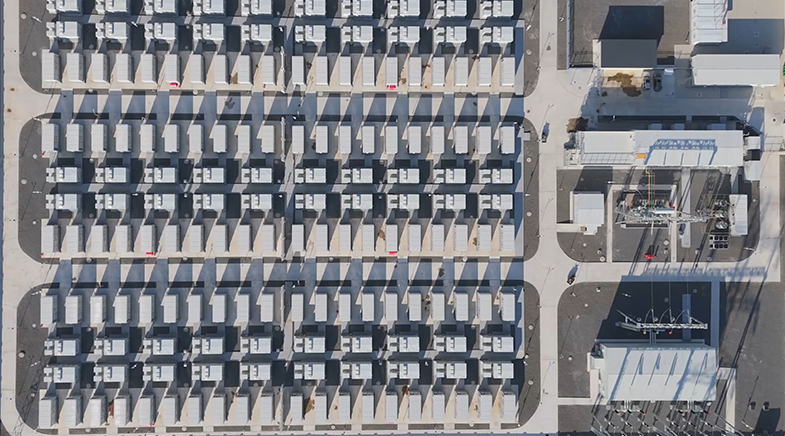
Batteries — to store power when it is produced in abundance and used as and when required — are a solution to the problems posed by renewable-leaning power systems. Battery storage helps build flexibility in the power system. VoltSeal, a start-up based in Delhi-National Capital Region, builds lithium iron phosphate (LiFePO4) Battery Energy Storage Systems (BESS) for large commercial enterprises, enabling them to store excess daytime solar energy. This stored power is then discharged when demand peaks.
Mudit Narain, Co-founder of VoltSeal, cites the example of large educational institutions that have arrangements for solar power generation on their own premises. To meet the rising evening-time demand, when students return to their hostels, the institutions use VoltSeal's battery storage. Other industrial customers use VoltSeal's BESS to reduce their dependence on diesel generator power, he adds. In some cases, users try to avoid steep demand charges by storing power. Discoms in certain States look at the highest demand made to the grid in a month and use that as a baseline to calculate the bill amount.
VoltSeal currently imports its battery cells from China, and makes the hardware and software embedded in the BESS, he explains. Although it provides BESS only to large commercial entities, Narain highlights that energy storage can occur at various levels: in homes, at grid substations, and even right next to a power plant.
The BESS market in India is seeing a sharp rise. Large commercial entities such as Tata Power, Reliance New Energy, and Adani Green Energy are in the fray. The recently released India BESS Market Review report estimates that India will require 888 gigawatt-hours (GWh) of energy storage capacity by 2035-36, nearly 900 times its current installed capacity of around 1 GWh (bit.ly/energy-requirement). The trend is common across countries and geographies. On March 29, California offered a glimpse of what BESS could do for the grid: battery storage delivered 12.3 GW of electricity at 7 pm local time — supplying 42.8% of the entire State's electricity demand at that moment. For nearly three hours (6 pm-9 pm), battery-derived energy remained above 20% of the total grid supply, helping ease peak evening demand.

DEMAND MANAGEMENT
Conventionally, the grid has always followed demand. Grid managers know that, say, at 7 pm, several million people will switch on their air conditioners, and the supply must meet this demand. Grid managers are now looking at it differently, wondering whether demand can be pushed to those hours when energy supply is abundant, or curtailed when it is not. These nudges in user behaviour are often implemented through tariff structures: time-of-day (ToD) tariffs, peak pricing, and so on. In India, the government is working to roll out ToD tariffs for commercial entities by 2027. Under this, electricity prices vary by the ToD: solar hours offer a 10-20% discount, while peak hours carry a 10-20% surcharge.
In addition to renewable energy expansion at the grid/producer level, rooftop solar installations in consumers' homes have grown significantly over the years. But while this decentralises energy generation and reduces the load on the grid, it may also create new challenges for grid managers. For instance, it can reduce demand, which may affect the financial health and stability of discoms.
Narasimhan cites the example of Sri Lanka, where close to 75% of the electricity demand on Sunday afternoons is met through rooftop solar power. This reduces the demand on the grid to such low levels that on many Sundays, "the Ceylon Electricity Board has issued requests to consumers to switch off the rooftop solar, because there was excess of it", he says. Many call this Sri Lanka's 'sunny Sunday' problem.
Batteries are a solution to problems posed by renewable-leaning power systems. Battery storage helps build flexibility in the power system.
On February 9, 2025 — a sunny Sunday — this low demand caused a cascade of effects that led to a countrywide blackout. According to a report in the Sri Lanka Mirror, the blackout began with a disturbance at a grid substation, causing a sudden voltage drop across the entire electricity network. "With a high amount of solar power generation, the grid lacked sufficient inertia — normally provided by traditional power plants — to absorb the shock from the disturbance. This situation quickly led to a serious imbalance between electricity generation and demand, triggering cascading failures and ultimately the complete islandwide blackout," it said.
To prevent similar situations, South Australia has implemented a system that allows transmission companies to remotely switch off rooftop solar power generators for consumers. This is a region with a high rooftop solar energy penetration. Since the rule took effect in 2020, the administration runs a mock drill each year to test the systems that enable remote disconnection of rooftop solar and minimise risks to grid stability. This year's drill on August 25 affected 100,000 customers, whose rooftop solar production was remotely ramped down.
NEW MARKET STRUCTURES
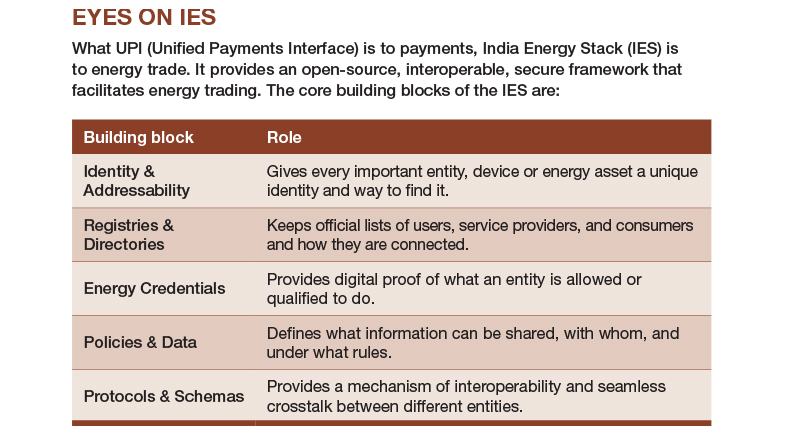
Bengaluru-based start-ups Pulse Energy and Kazam are developing digital energy market platforms that allow rooftop solar owners to sell surplus energy to others on the platform. While the electricity itself still flows through the grid, purchasing, bill settlement, and finding buyers and sellers take place on the digital platform. These digital platforms are based on India Energy Stack (IES), a public infrastructure for the power sector. Energy traders have a unique identity number, and smart meters that record generation and consumption data in real time, which the discom verifies before allowing the trade.
Some of the earliest peer-to-peer pilots for energy trading are happening with discoms such as PVVNL (Pashchimanchal Vidyut Vitran Nigam Ltd) in Uttar Pradesh, and Tata Power-DDL and BSES Rajdhani Power Limited in Delhi. The trades are notified a day in advance, and the final electricity transfer occurs only after the discom approves the trade. The power still reaches the buyer through the grid. Still, it is no longer the conventional flow of electricity from the power plant to the consumer, but rather from a rooftop solar owner to the user via the grid.
The government is working on tariffs for commercial entities: solar hours will offer a discount; peak hours carry a surcharge.
Bengaluru-based start-up SundayGrids allows city-dwellers without rooftop solar panels to access solar energy by reserving panels in large-scale, shared solar projects. This framework of generating and using solar energy is also called digital solar, as users do not install physical solar infrastructure on their premises. Users still get their electricity from the local grid but can pay their electricity bills using credits earned from the digital solar system on the start-up's platform.
In the past five years, the company has installed 2.1 megawatts across 26 projects, says Paul Samuel, Head of Growth at SundayGrids. "Right now, around 150-200 kilowatts get sold out on our platform monthly, and we have a user base of 5,000 plus," he says. While customers come from metropolitan cities such as Mumbai and Bengaluru, it also has users from far-off Lakshadweep and Kashmir.
Clearly, the grid is changing shape. The shifting nature of energy consumption and production promises a mix of opportunities — and challenges.









Economist as engineer
Why tech companies are building strong teams of economists.






Have a
story idea?
Tell us.
Do you have a recent research paper or an idea for a science/technology-themed article that you'd like to tell us about?
GET IN TOUCH