

Your Brain, Outsourced
-
- from Shaastra :: vol 05 issue 06 :: Jun 2026
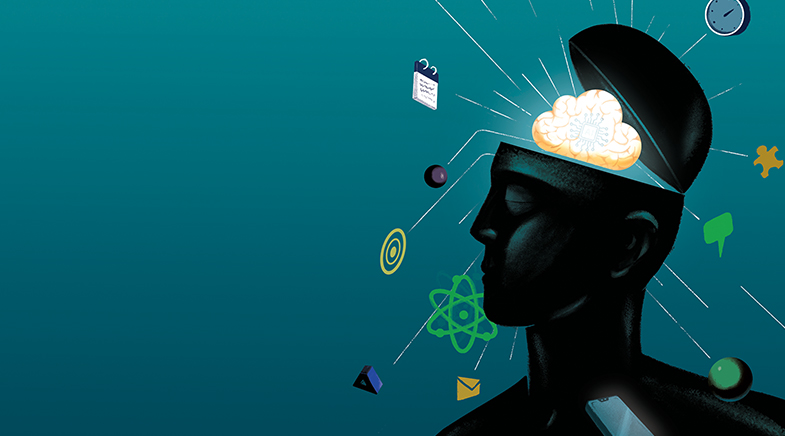
How AI takeover of mental tasks influences your memory, attention, and expertise.
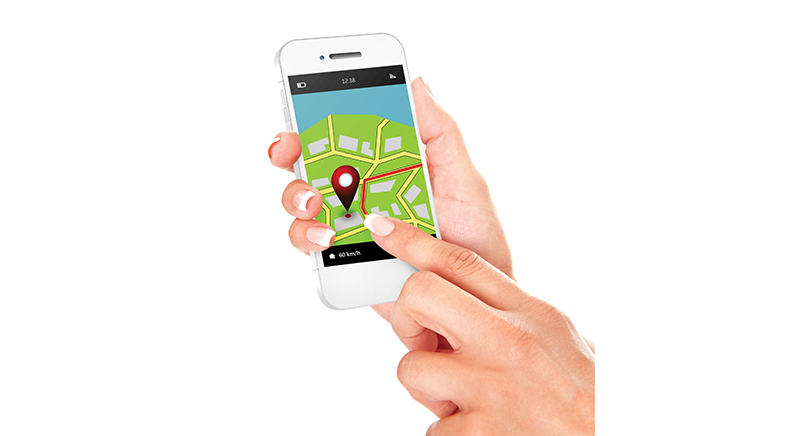
Day and night, drivers glance down at glowing blue lines on their phone screens as they navigate traffic, intersections, roundabouts and turns. For many, reaching a destination has become an exercise in following instructions rather than building a mental map of the landscape unfolding around them. Without the Global Positioning System (GPS), they might struggle to retrace their routes on their own.
Six years ago, Véronique Bohbot, Professor of Psychiatry and memory expert at McGill University in Canada, probed a deceptively simple question: what happens when people stop navigating for themselves? In her 2020 research (bit.ly/GPS-spatial-memory), she found that people who habitually used GPS technology showed poorer spatial memory and were less likely to use the hippocampus – a region of the brain linked to memory and navigation. Her findings suggested that reliance on GPS appeared to shift people away from understanding the layouts of places and towards following the directions provided.
Since then, scientists have extended the scope of such research beyond navigation into broader aspects of human cognition – memory, reasoning, skills, and decision-making – as generative artificial intelligence (GenAI) systems have entered everyday life. GenAI systems now help people write emails, answer homework questions, summarise meetings and documents, and produce software.
As GenAI – technology that can create new content from patterns learned from existing data – is increasingly used to outsource memory, analysis, and decision-making, educators worry that students who write essays using such aids might lose their critical-thinking skills. Software engineers debate whether outsourced code completion might erode their own problem-solving abilities. In Poland, gastroenterology researcher Marcin Romańczyk and colleagues have observed (bit.ly/colonoscopy-AI-deskill) that experienced doctors who routinely used AI-assisted colonoscopy became worse at detecting possible precancerous growths without the AI support. The average detection rate fell from 28% before the use of AI to 22% afterwards. In AI-assisted colonoscopies, the detection rate was 25%. Romańczyk says he was surprised by the extent of the decline. Such findings have raised fears that outsourcing mental tasks may not only change how humans work but also diminish underlying skills themselves.
COGNITIVE OFFLOADING
At the centre of such concerns is a question scientists are now trying to probe: what might happen to the human brain when cognitive work is routinely delegated to machines? This question sits within a broader body of research on what scientists have begun to call "cognitive offloading" – the delegation of tasks to external aids, including GenAI, to reduce mental effort.
"It is not easy to find answers to that question – for two reasons," says Arpan Banerjee, a neuroscientist at the National Brain Research Centre in Manesar (Haryana). Banerjee has spent more than two decades engaged in studies in attention, cognition, and the processing of sensory information using neuroimaging techniques. "First, there is this conceptual challenge: what exactly do we mean when we ask whether the brain's capabilities might get eroded? We do not yet have clear, unambiguous quantitative measures for some of the brain's capabilities," he notes.
In addition, he points out, there is an "experimental challenge: we can design short-term lab experiments, but we don't know whether they can be extrapolated over the long term. How do we design experiments in which some people use GenAI and others don't, and how do we measure how their brains might change over many years? We haven't been able to do such experiments even with calculators or spell-checkers."
PROMISES AND PERILS
Disagreements among researchers over the likely outcomes of long-term exposure to GenAI are already evident. Some believe AI systems could expand human knowledge by helping people make better decisions, solve problems more efficiently, and accelerate scientific discovery. Others worry that as AI becomes increasingly capable of providing answers, recommendations, and completed tasks, people may invest less effort in learning on their own.
Widespread reliance on GenAI tools could reduce the frequency with which people engage in deep cognitive effort.
"Proponents of both views can find evidence to support their position," Daron Acemoglu, Institute Professor of Economics at the Massachusetts Institute of Technology, and his colleagues wrote in a research paper earlier in 2026 (bit.ly/acemoglu-ai-human). "The disagreements are in part about whether AI-provided information is a complement or a substitute to human learning. If the former, then expanding of AI will make humans put their effort and attention in where it matters and use AI's inputs with growing effectiveness. In the substitutes case, however, better and better AI will increasingly discourage human effort and learning – because most relevant information comes to be served to humans on a platter."
Evidence for both possibilities is currently visible. Researchers have shown that AI systems can help design new proteins and drug candidates, opening pathways through biological complexity that would otherwise take years of trial and error. In other settings, studies have suggested that AI can improve performance in professional work by rapidly supplying useful information at the right moment. In hospitals, researchers at Mass General Brigham in the U.S. have found (bit.ly/brigham-social) that a set of GenAI tools could pull out subtle details about patients' lives – such as housing conditions, work situations, and social support – that are often buried in doctors' notes and rarely make it into formal medical records. When tested across clinical settings, these tools identified 93.8% of patients with documented social risk factors, compared with just 2% captured by standard diagnostic codes.
THIS TIME IT'S DIFFERENT
The surge of GenAI tools began in 2022-23. But long before that, humans had already outsourced fragments of mental tasks – to slide rules, calculators, computers, smartphones, search engines. But some researchers argue that something feels different about the current shift. These newer systems do not merely perform fast arithmetic or retrieve stored information; they participate in reasoning, interpretation, and decision-making itself.
Psychologist Fabio Del Missier at the University of Trieste, Italy, and his colleagues have sought to probe something more unsettling than whether cognitive tools merely improve momentary performance: what happens when that support suddenly disappears. In experiments involving map-based planning tasks, participants who had learned to rely on external visual aids struggled disproportionately when those aids were removed, performing worse than participants who had never offloaded the task in the first place. The findings, published earlier in 2026, add a fresh edge to concerns about the long-term consequences of cognitive outsourcing (bit.ly/offloading-unbalance). They suggest that cognitive outsourcing may do more than weaken isolated skills such as memory or navigation. It may also reshape the strategies people use to think — making cognitive performance increasingly dependent on whether external scaffolding is present, and less flexible when that support is taken away. In a world scaffolded by GenAI, this raises a deeper possibility: that the hidden cost of outsourcing cognition may not appear while the tools are available, but when people are required to think without them. The effect suggests a parallel with habituated drivers denied GPS overnight.
Reliance on GPS shifts people away from understanding the layouts of places and towards following the directions provided.
Amid the expanding adoption of GenAI, Acemoglu and his colleagues distinguish between two forms of knowledge that shape human decision-making: general, transferable understanding built through experience, and context-specific information tied to particular situations. In everyday life, these forms are usually learned together, but GenAI systems are particularly strong at supplying the latter — instant, situation-specific guidance. The concern is that widespread easy access to such systems may reduce incentives to build the deeper, general knowledge required for independent reasoning.
Del Missier, for his part, argues that the central question is not whether cognitive offloading is inherently good or bad. Humans have always extended their minds through external tools. The problem arises when convenience begins to replace capability. Cognitive outsourcing is beneficial, he says, when it improves performance "without harming the underlying cognitive skills" and when people still retain the knowledge and strategies needed once the support disappears.
But scientists still do not know where that threshold lies. Del Missier is among those who believe AI systems belong to the same continuum as maps, calculators, and search engines. But widespread reliance on GenAI tools could reduce the frequency with which people engage in deep cognitive effort. "This is a risk, given that complex reasoning and problem-solving tasks may be particularly effortful," says Del Missier. The deeper challenge "is how to preserve and even develop human abilities while interacting with these very powerful tools".
KNOWING WHEN TO OUTSOURCE
In a widely cited 2016 review (bit.ly/risko-offloading), psychologists Evan Risko at the University of Waterloo in Canada and Sam Gilbert at University College London described the delegation of mental tasks as "cognitive offloading". In their analysis, humans shift cognitive burdens onto external tools because mental capacity itself is limited. People often choose to offload information or problem-solving when they believe external systems can perform the task more efficiently than their own internal memory or reasoning processes.
Their review proposed that a range of technologies – from written notes and calculators to GPS systems and digital reminders – could be understood within a common scientific framework. They said that offloading by itself is not inherently harmful; it can expand what people are able to accomplish by allowing them to bypass some cognitive constraints. But they also cautioned that reducing the need to internally maintain information or perform mental operations could alter what people remember and how they think.
"There is limited work on repeated cognitive offloading," says Risko. "But based on what we know about how we develop cognitive skills, I think it is reasonable to hypothesise that GenAI, depending on how integrated it becomes to our day-to-day cognitive lives, can shape strategies for people to think, remember, solve problems, or make decisions."
Other researchers have begun to focus on a more practical question: whether people can learn to use cognitive offloading wisely. In another study published earlier in 2026 (bit.ly/optimal-cognitive-offloading), Gilbert and a colleague at University College London examined how people decide whether to rely on their own memory or use external reminders. Participants in experiments could either depend on internal memory for a larger reward or set reminders for a smaller one. Many misjudged their own memory abilities and offloaded too much or too little. But after a brief intervention in which participants predicted their performance and received feedback, they became better calibrated about their own abilities and adopted more optimal reminder-setting strategies. The findings suggest that some of the risks associated with cognitive offloading may depend not only on the tools that people use, but also on how accurately they understand their own cognitive strengths and limitations.
The study points towards a more integrated understanding of cognitive outsourcing, where the central issue is not simply whether external systems are used, but how accurately people understand the limits of their own cognition when deciding whether to rely on them. In this framing, the challenge posed by GenAI is not only about preserving memory or reasoning skills, but about preserving the ability to judge when cognitive work should be delegated to machines and when it should remain in human hands. "I think the key question is what we do with the cognitive ‘savings' which we might obtain from using external tools," Gilbert says. "If we redeploy our mental abilities for something that we find valuable or rewarding, that's a good thing."
Beneath these questions about cognitive offloading lies a more fundamental one: how external inputs shape the mental processes that support memory and attention in the first place. In a recent study, Sridharan Devarajan and his colleagues at the Indian Institute of Science in Bengaluru set out to understand how visual distractions interact with working memory – the brain's system for temporarily holding and manipulating information. Using electroencephalography recordings and computational modelling, they found that distracting visual stimuli presented during memory tasks could systematically distort what participants remembered, biasing stored information either toward or away from the distractor depending on where it appeared in space. Stronger focus helped protect memories from distortion, while stronger encoding of distractions increased their influence. "It is when working memory gets compromised or overloaded that participants are likely to seek the benefits of cognitive offloading," says Devarajan.
Human cognition may not simply be using new tools. It may instead be reorganising around them.
While these effects are observed in controlled laboratory settings, researchers are now asking whether similar dynamics might be unfolding at scale in real-world digital environments. If attention and memory are shaped by competition with external inputs at the millisecond level, what happens when that competition is extended across minutes, hours, and years of digital exposure?
KNOWLEDGE COLLAPSE
For over two decades, psychologist Gloria Mark at the University of California, Irvine, has been tracking how long people remain focused on screens before switching off. In 2004, her team found that people spent an average of about two-and-a-half minutes on a screen before shifting attention. That figure has since dropped to about 47 seconds on any screen, while interrupted workers can take roughly 25 minutes to fully return to an original task.
"This is alarming," says Mark. "But it does not mean we're doomed to live unfocused lives." Mark is the author of Attention Span, a 2023 book that examines why multitasking often reduces productivity, how modern digital environments fragment attention, and how cognitive resources can be depleted and restored.
Mark believes GenAI may represent a deeper cognitive transition than earlier digital technologies. Previous tools largely extended human abilities while still requiring people to actively think through tasks themselves, she says. "Now, humans are actually delegating entire cognitive tasks to GenAI," including critical thinking and idea generation. "Whereas earlier technologies extended people's abilities, people still had to put in some cognitive effort," Mark says. "Now, it's more than reducing cognitive effort; it's taking over the cognitive effort."
And current research, Mark says, is suggesting that as reliance on GenAI grows, critical-thinking skills are weakening. "There are three solid studies out now showing this," she says. "One study shows that as trust in GenAI grows, critical thinking diminishes." But she cautions that these are correlational studies, meaning that one action cannot be said to have directly caused the other.
For now, the studies point toward a possibility that neuroscientists, psychologists and AI researchers are only just beginning to understand: as intelligent systems become woven into everyday cognitive tasks, human cognition may not simply be using new tools. It may instead be reorganising around them.
The implications may extend beyond individual skills. Acemoglu and his colleagues argue that much of society's shared knowledge is built through the cumulative efforts of people learning, practising, experimenting, and contributing insights that others can build upon. Highly capable AI systems could improve decisions in the short term by supplying useful recommendations and information. But if reliance on those systems reduces the effort that people devote to learning, the long-term production of human knowledge may also decline.
They describe an extreme theoretical possibility they call "knowledge collapse" – a state in which human learning and knowledge creation gradually diminish because increasingly capable AI systems have taken over much of the work that motivated people to acquire expertise themselves. The scenario is a theoretical prediction. But it illustrates how concerns about cognitive offloading may ultimately extend beyond individual memory, attention, or reasoning to the future of collective human knowledge.
See Also:









Ctrl+P to repair bones
A bioink that prints tissues on injured sites leaves its mark on healing.

Secret lives of leaves
Life on Earth is sustained by leaves' ability to capture sunlight and convert it into biologically usable energy.

Fathoming turbulence
Unravelling how heat threads through chaos helps researchers grasp issues ranging from weather patterns to stellar physics.



Have a
story idea?
Tell us.
Do you have a recent research paper or an idea for a science/technology-themed article that you'd like to tell us about?
GET IN TOUCH