

Break and make
-
- from Shaastra :: vol 05 issue 07 :: Jul 2026
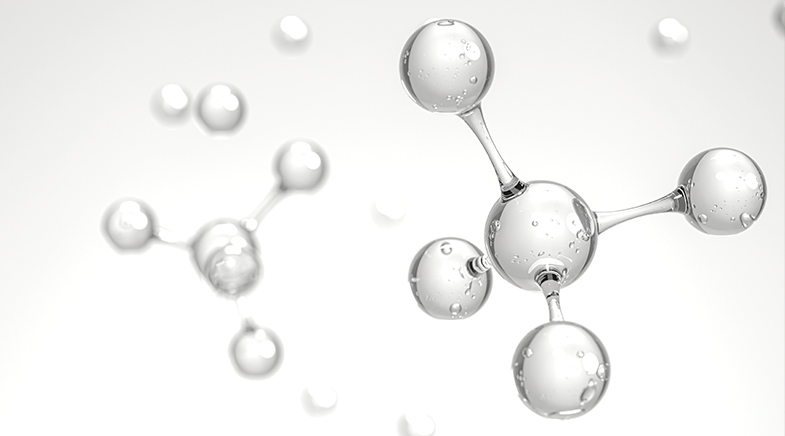
Crystals form when the local symmetry breaks: study.
Soumyajit Roy recalls how a professor once showed him a crystal structure pictured in a prestigious journal. If Roy could grow a good crystal structure, the professor said, it would likely be published in a similar journal one day. Twenty-five years later, Roy, now a chemist at the Indian Institute of Science Education and Research Kolkata, and his group have addressed a fundamental question in materials science: how crystals form.
In a study (bit.ly/Crystal-form), Roy's group has shown that crystallisation does not occur all at once. Instead, matter gradually develops a local order before becoming a fully formed crystal. Using a dimethyl sulfoxide (DMSO)-based system, the researchers tracked crystal formation in solution. They used an in situ cryo-crystallisation technique, which rapidly freezes samples and allows scientists to capture intermediate stages of the process.
The group observed that an intermediate colloidal state lies between the initial solution and the final crystal. The colloidal state is symmetric and looks the same from every direction. As crystallisation begins, this symmetry gradually breaks down, and periodic patterns emerge. "The crystallisation could be understood as a process of local symmetry breaking," Roy says. "The interface between the colloid and the crystal is actually the interface where symmetry breaking takes place," Roy adds.

The findings could lead to applications in fields such as pharmaceuticals, electronics and biotechnology. The structure-function relationship of proteins can be found in a crystal structure, Roy points out. In an earlier study on paracetamols, his team noted that drug molecules could pass through an intermediate state made of tiny, suspended particles before forming crystals. Understanding this process would help scientists produce the desired crystal form of a drug, since different crystal forms can behave differently in the body.
The findings could also help data storage technologies. Germanium-antimony-tellurium (GST) compounds, used in data storage, can switch between amorphous (disordered) and crystalline (ordered) states. These reversible transitions help information to be written, stored and erased in electronic devices.
The IISER team is exploring how materials change from one state to another. While these transformations are usually linked to electric fields, the researchers think a field associated with soft matter may also play a role in the change.
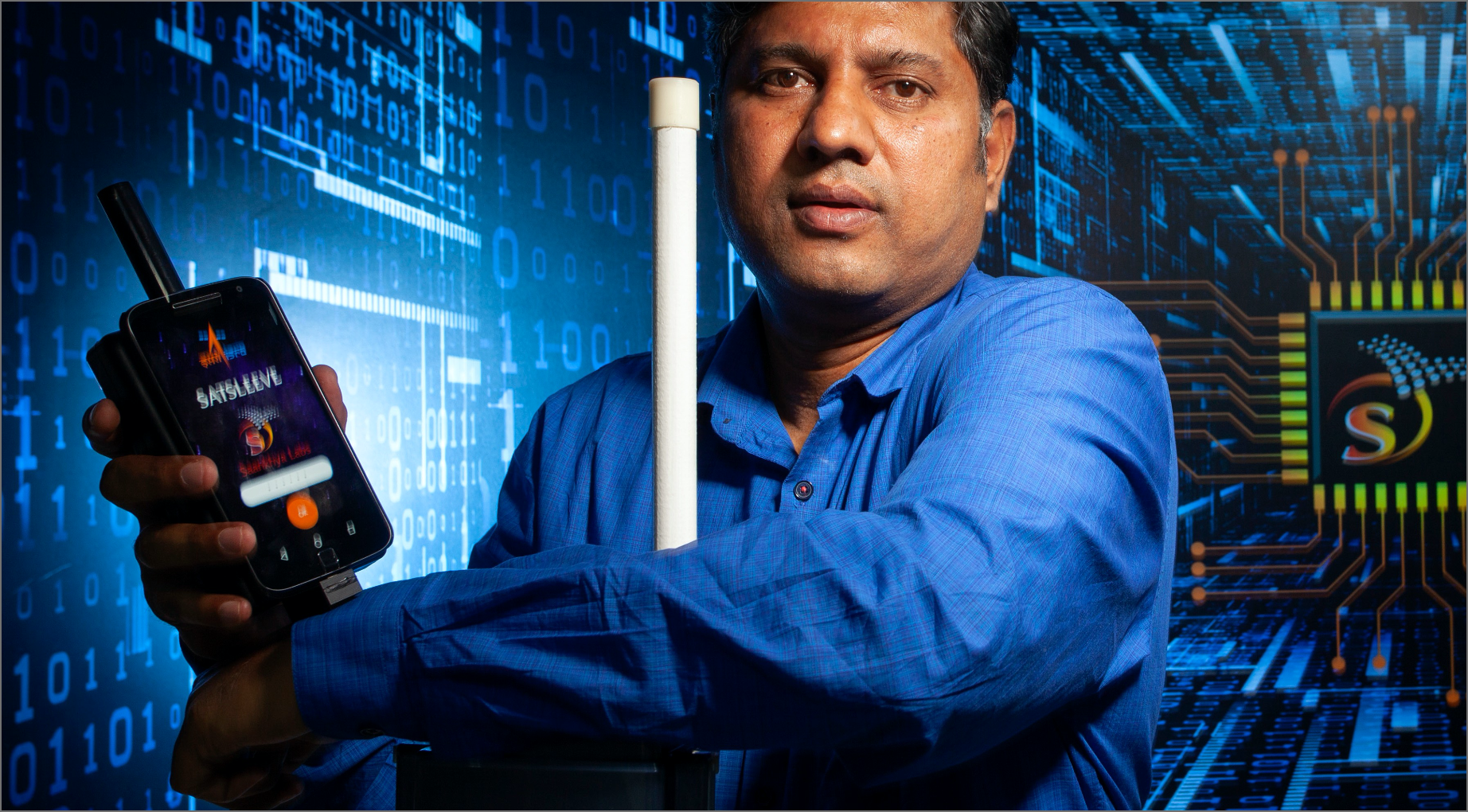








The chips are up!
After several false starts over the decades, the semiconductor industry in India awaits a new dawn – and a fabless future!
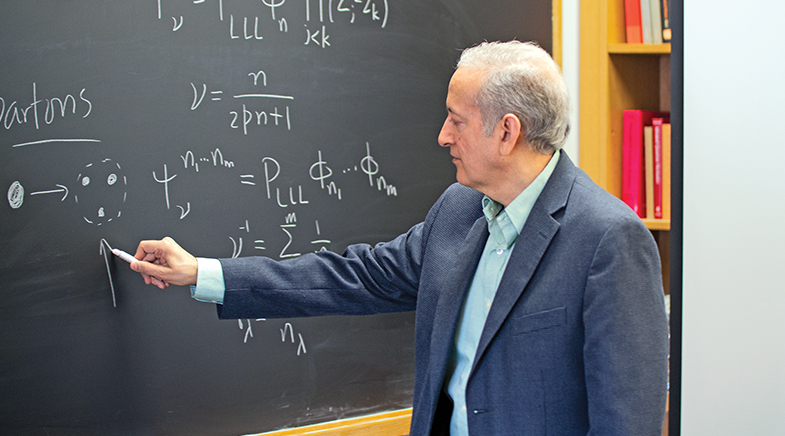
For a world-class physics research institute in India
Theoretical physicist Jainendra K. Jain on the excitement, and the challenges, of establishing privately funded research institutes in India.
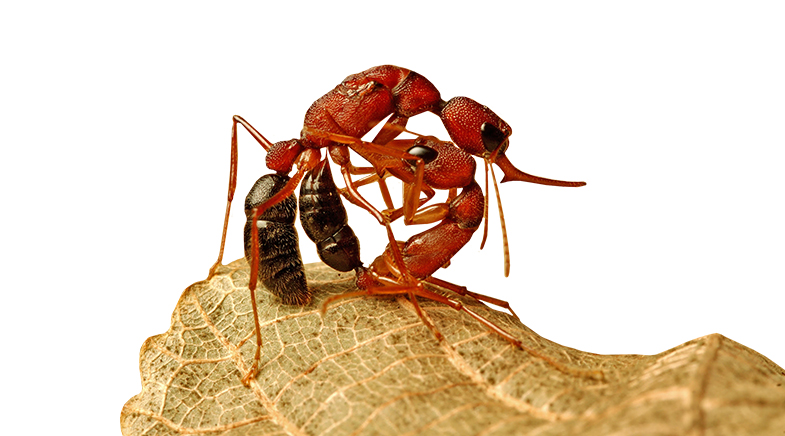
Long live the queen!
A queen ant manages a long lifespan despite overeating and being inactive. Researchers offer insights into her charmed life.



Have a
story idea?
Tell us.
Do you have a recent research paper or an idea for a science/technology-themed article that you'd like to tell us about?
GET IN TOUCH