

Protein to the rescue
-
- from Shaastra :: vol 05 issue 03 :: Mar 2026
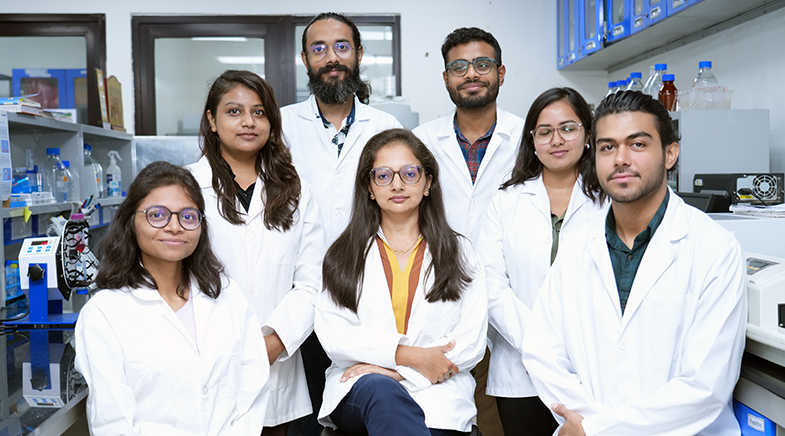
A human protein heals infections and wounds, says a study.
Researchers have identified a human protein that combats antibiotic resistance and promotes healing. A team from the Indian Institute of Technology (IIT) Jodhpur has demonstrated that β2-microglobulin inhibits biofilm formation and can mitigate biofilm-related infections. A biofilm is like a fortress that microbes build around themselves as a shield against antibiotics and host immune responses. It is responsible for persistent infections, especially those associated with devices such as catheters, prosthetic valves, and orthopaedic implants.
Biofilms, a slimy layer of polysaccharides, lipids, and proteins, contribute to antibiotic resistance by limiting a medicine's penetration. Scientists have tried developing molecules that target biofilms but met with limited success. "They don't have specific specificity, and these small molecules also mostly fail in clinical trials," says IIT Jodhpur Associate Professor Neha Jain, who led the research.
Looking for a molecule to target biofilms, Jain's team came across the β2-microglobulin, which is structurally similar to a bacterial protein that prevents the formation of amyloids, a protein found in the biofilm layer. The team added this protein to a bacterial culture of E.coli, a biofilm-forming bacterium that can cause, among other diseases, urinary tract infections. The team found that 40 µM of this protein reduced the biofilm biomass by 70% but did not kill the bacterial cells. The team then confirmed, using scanning electron microscopy, that the protein reduced biofilm formation by interfering with the formation of an amyloid protein component of the biofilm layer.
"The discovery of a human immune protein with anti-biofilm effects and the effect of the protein on the non-living elements of the biofilm open possibilities of developing targeted treatments to prevent biofilm formations," says Karishma Kaushik, a consultant, science author and expert in infection research biology. Kaushik is not associated with the study.
To test the efficacy of this protein, the team wounded and infected rats with E.coli. Some rats were later given the β2-microglobulin protein, and it was found that the protein not only cleared the infection but also healed the wound. Surprised by the protein's healing ability, the researchers tested it again in cell culture. The result confirmed that the protein had a healing effect as well. The study has been published in the journal Proceedings of the National Academy of Sciences (bit.ly/Healing-Protein).
Jain's team is developing a hydrogel containing a peptide derived from this protein that can be coated on catheters to curb the spread of an infection. As it is a human protein, the body will not generate an immune response against the peptides, she says. Jain adds that it may take the team 2-3 years to produce the hydrogel.








Banking on seeds
Seed conservation is an essential part of food security. But it’s not just the state: researchers are conserving traditional crops, too.


Dr Bot wields the scalpel
Robots are rewriting the rules of surgery, with a precision that humans may find hard to match. A glimpse of the revolution in the operation theatre.




Have a
story idea?
Tell us.
Do you have a recent research paper or an idea for a science/technology-themed article that you'd like to tell us about?
GET IN TOUCH