

The patient at the centre
-
- from Shaastra :: vol 05 issue 03 :: Mar 2026
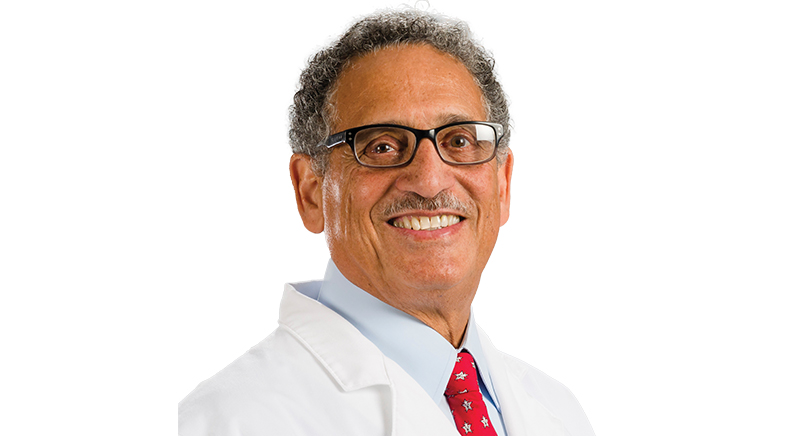
Surgeon Lenworth M. Jacobs advocates a 'safety first' approach while letting machines into the operation theatre.
Lenworth M. Jacobs characterises the technological changes sweeping across surgical rooms as an "avalanche" of artificial intelligence (AI). A Professor of Surgery, and Professor of Traumatology and Emergency Medicine at the University of Connecticut, and Director of Trauma Surgery at Hartford Hospital, Connecticut, Jacobs is also a member of the Board of Commissioners of Joint Commission, a not-for-profit organisation that sets healthcare standards and accredits hospitals and medical services. As such, he has a front-seat view of the revolution under way in the operation theatre and a keen understanding of how a regulatory framework needs to evolve to encompass the new realities. His mantra: keep the patient at the centre. Excerpts from an interview:
How would you describe the evolution you've witnessed, especially the shift from open surgery to robotics?
I have been in surgery for five decades. The changes are profound. They have been accelerating dramatically in the last 10 years – and even more so over the last five. We're looking at an exponential curve now. When I was training, surgeries were open. The rule was that if there was a penetrating injury to the chest, abdomen or neck, you explored it with a scalpel or other instruments. The good part was that we became very experienced in surgery. But about 50% of the operations for trauma were not particularly necessary because by the time we reached the wound, it had already stopped bleeding.
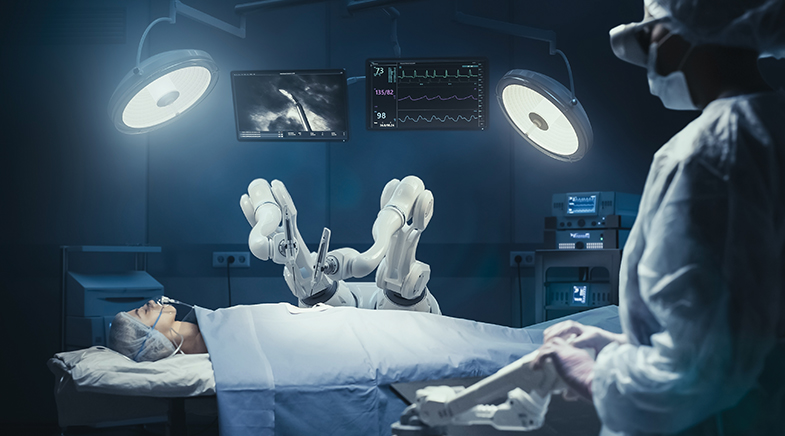
Over time, we got better imaging with CT scans and MRI. By the 1990s and early 2000s, minimally invasive surgery became popular, and over the last 15 years, surgery has moved from minimally invasive instruments to robotic instruments, which can mimic the movements of the surgeon’s fingers extremely well. Now, the surgeon is no longer peering inside the abdomen but looking at a magnified image on a video screen. The optics and instruments are phenomenally good; we can make extremely tiny and precise movements. All this has dramatically changed things in the operation theatre (OT). The outcome for the patient is much better: less injury, quicker healing.
You have certain reservations about this shift, don't you?
The more surgery evolves, the less is the surgeon's connect with the patient. AI has taken surgery a step further. The machine can be educated to do exactly the same moves it is trained upon, without the surgeon needing to manipulate it. Here comes the issue. In reality, surgery is rarely predictable. If the autonomous system encounters a problem it has not been trained upon, it will not know what to do. The human surgeon, who has experience of many surgeries, is trained to avoid making an error in the first place, and if it happens, on how to correct it. Each individual has a different physiology; every diseased organ is different. A machine will have to be trained on millions of cases to "gain experience".
"An autonomous robot may do a procedure very well, but it cannot treat a patient – and these are two very different things."
The other issue, in my opinion, is more important. I believe in the doctor-patient relationship. The machine does not explain to the patient and the family what the procedure will be, what pain to expect, the likely complications. The machine is only there at a fixed point in time: the operating procedure. The treatment starts before the operation and continues after the operation, till you get better. An autonomous robot may do a procedure very well, but it cannot treat a patient – and these are two very different things. The trust factor between doctor and patient plays a very important role in the patient getting better, but it is deteriorating. With remote surgeries, when the surgeon may be in another continent, the connect is even less.
There is one more dimension. These new machines are incredibly expensive, and they have to be used very often to pay for themselves. Now, what are the rules around this issue? Is surgery being scheduled truly for the benefit of the patient or is there a component of profit and loss going on in the background? Who checks this?
One cannot go back to the scalpel age. How should the ecosystem shift to accommodate the new realities?
This is an area which requires much thought. While technology has raced ahead, we haven't paid much attention to evolving a regulatory mechanism. Machines have brought in the manufacturer, the programmer, and the technician also into the room. Who takes the blame when something goes wrong? Also, these are expensive machines, with high maintenance costs. Everyone wants a machine in perfect working condition. It was easy with the scalpel, which lasted several years, yet cost little to replace. Not so now. So who pays?
It is very important that when we sit down to frame guidelines, every stakeholder should be in the room; if anyone is missing, an entire facet will be ignored. We do not want to have a problem and then try to solve it prospectively. And it is very important that people who are affected by this should be at the table to make the rules.
I compare the scenario with aviation. It is global, and every airport, plane and runway complies with a universal set of rules. Aviation evolved a common language. The standardisation took time and much political persuasion, but the objective was: safety first. My thinking is that AI in surgery should develop a zero-negative-effect goal and then evolve pathways to reach that goal. If there is an unfavourable outcome, there should be an objective set of people to evaluate whether it was a machine error, a programming error, or the disease itself.
"AI in surgery should develop a zero-negative-effect goal and… evolve pathways to reach the goal of 'safety first'."
Will cutting-edge technology widen the equity gap?
Part of our challenge is to make sure that doctors doing super-modern stuff retain the skill set for operating in less technologically advanced situations. The second part is to ensure that those who do not have access to the sophistication get it. There will always be a divide, but one needs a certain philosophic plan to ensure how to bridge it. Cataract surgery is a good example. We used to do it with scalpels earlier; now, laser surgery is available almost everywhere. It is still expensive, and someone has to pay for it. With newer machines, the difference is pretty dramatic, and it will require the authorities to evolve a plan to ensure access for everyone.
How will surgeons retain the skills of traditional surgery if most patients prefer the less-invasive options?
I am a trauma surgeon. We need to perform emergency surgeries in any situation. So we are very much involved in teaching those skills to younger people and to maintaining the skill set of the older people as they migrate towards more robotics. There is the regular practise on cadavers; and luckily, we now also have very good simulators for training.
The bigger challenge is to give doctors the skill sets to keep up with new technology. Already a medical course is intensive. It took me 13 years to train. The curriculum has become more challenging now. A surgeon wanting to be relevant 10 years from now would also need to have programming skills and at least a basic knowledge of how to maintain and fix a robot. When will they start their medical practice? The medical curriculum has to consider these aspects, now.
Will human power become less relevant in the OT of the future?
Going back to the aviation analogy, autopilot on planes hasn't replaced pilots. Even though instruments take over much of the task, the pilot needs to know every aspect of flying. The surgeon’s role will similarly evolve. A traditional OT team comprises a surgeon, an anaesthetist, a scrub nurse and a technician. Now, there may also be someone to fix the ports, and somebody somewhere on call if the machine doesn't work right. The roles will change, and the training will, too. If a car breaks down, it can be fixed later. But if there is a mechanical glitch during surgery, it has to be fixed immediately. Remember, at the very centre of the circle is a sick person. Everything else should be around the patient.
It must be a good time to be in the profession right now.
Yes, it is a dynamic and very exciting time. Generally speaking, the developments are for the good, and they will grow to scale. Those changes that cannot be sustained because of cost or implementation problems will fall by the wayside.
It is a challenging time, too. Then again, we've had challenging times forever.









Secret lives of leaves
Life on Earth is sustained by leaves' ability to capture sunlight and convert it into biologically usable energy.
At a loss for words?
Fear not, AI is at your service. A network of engineers and researchers is creating machine learning systems for Indic languages.

Pollen power
The 'diamond of the natural world' helps map migrations, and assists in solving ancient riddles and modern crimes.



Have a
story idea?
Tell us.
Do you have a recent research paper or an idea for a science/technology-themed article that you'd like to tell us about?
GET IN TOUCH